

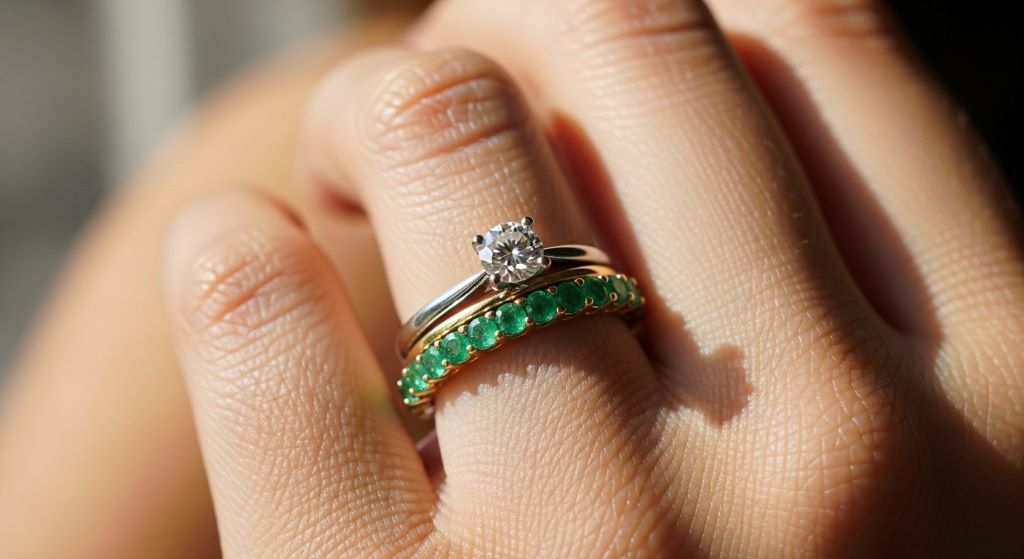
Pairing an emerald wedding band with a solitaire engagement ring creates stunning visual contrast. The vibrant green stones complement the brilliance of a diamond solitaire perfectly. However, achieving the right balance requires thoughtful consideration of metal types, band widths, and stone placement.
Understanding the Appeal of Emerald Wedding Bands
Emerald wedding bands have gained popularity for their rich color and symbolism. These green gemstones represent renewal, growth, and eternal love. Additionally, emeralds offer a unique alternative to traditional diamond eternity bands.
The deep green hue creates eye-catching contrast against white metals and clear diamonds. Therefore, couples seeking distinctive bridal sets increasingly choose emerald wedding bands. This trend reflects growing interest in colorful gemstone jewelry.
Emeralds rank 7.5 to 8 on the Mohs hardness scale. While durable enough for daily wear, they require more care than diamonds. Nevertheless, proper maintenance ensures emerald bands remain beautiful for generations.
Choosing the Right Metal for Your Emerald Band
Metal selection dramatically impacts how emerald bands coordinate with solitaire rings. White gold and platinum provide classic elegance that enhances emerald color. The cool metal tones make green stones appear more vibrant.
Yellow gold creates warm, vintage-inspired combinations with emeralds. This pairing evokes Art Deco glamour and works beautifully with round or cushion-cut solitaires. Moreover, yellow gold complements the slight yellow undertones present in some emeralds.
Rose gold offers contemporary romance when paired with emerald bands. The pinkish hue creates unexpected color harmony with green stones. However, ensure your solitaire engagement ring also features rose gold for cohesive styling.
Matching metals between engagement and wedding rings typically creates the most harmonious look. Additionally, identical metal finishes prevent visual disconnection between the two rings. Consider whether you prefer polished, brushed, or mixed finishes.
Band Width Considerations
Band width affects both comfort and visual balance when stacking rings. Thin emerald bands measuring 1.5 to 2 millimeters create delicate, feminine stacks. These slender bands nestle perfectly alongside most solitaire settings without overwhelming them.
Medium-width bands between 2.5 and 3.5 millimeters offer substantial presence. This width works well with larger solitaire diamonds above one carat. Therefore, the emerald band maintains visual importance without competing.
Wide bands exceeding 4 millimeters make bold statements. These substantial bands suit minimalist solitaires with simple settings. However, verify that wide bands sit flush against your engagement ring before purchasing.
Consider your finger size and lifestyle when selecting band width. Narrower fingers often appear more balanced with thinner bands. Additionally, active lifestyles may require sturdier, wider bands for durability.
Emerald Cut Patterns and Arrangements
Full eternity emerald bands feature stones circling the entire band. This continuous design offers maximum sparkle from every angle. However, full eternity bands cannot be resized, requiring accurate sizing.
Half eternity bands display emeralds across the top portion only. The plain metal underneath provides comfort and resizing flexibility. Moreover, half eternity designs often cost less than full eternity options.
Channel-set emeralds sit securely within metal grooves for protection. This setting style suits active lifestyles because stones remain flush with the band. Therefore, channel settings minimize snagging risks.
Prong-set emeralds allow more light interaction, maximizing brilliance. Small prongs hold each stone individually while exposing more gem surface. Additionally, prong settings create traditional, elegant appearances.
Pavé emerald bands feature tiny stones set closely together. This technique creates continuous green sparkle resembling paved stones. Nevertheless, pavé settings require regular maintenance to ensure prongs remain secure.
Matching Emerald Shapes to Solitaire Diamonds
Round emeralds complement any solitaire diamond shape beautifully. Their classic shape coordinates with round, oval, pear, and princess-cut diamonds. Additionally, round emeralds offer the most brilliant sparkle among colored gemstones.
Emerald-cut emeralds create sophisticated combinations with step-cut solitaires. This pairing emphasizes clean lines and geometric elegance. However, emerald-cut stones reveal inclusions more readily, requiring higher clarity grades.
Oval emeralds work exceptionally well with oval and elongated solitaire shapes. This coordination creates harmonious visual flow between rings. Moreover, oval emeralds appear larger than round stones of equal carat weight.
Square or princess-cut emeralds suit contemporary tastes and modern solitaire settings. These angular shapes create bold, architectural aesthetics. Therefore, couples preferring modern styling appreciate these geometric combinations.
According to Vogue, coordinating gemstone shapes between engagement and wedding rings creates cohesive, intentional styling.
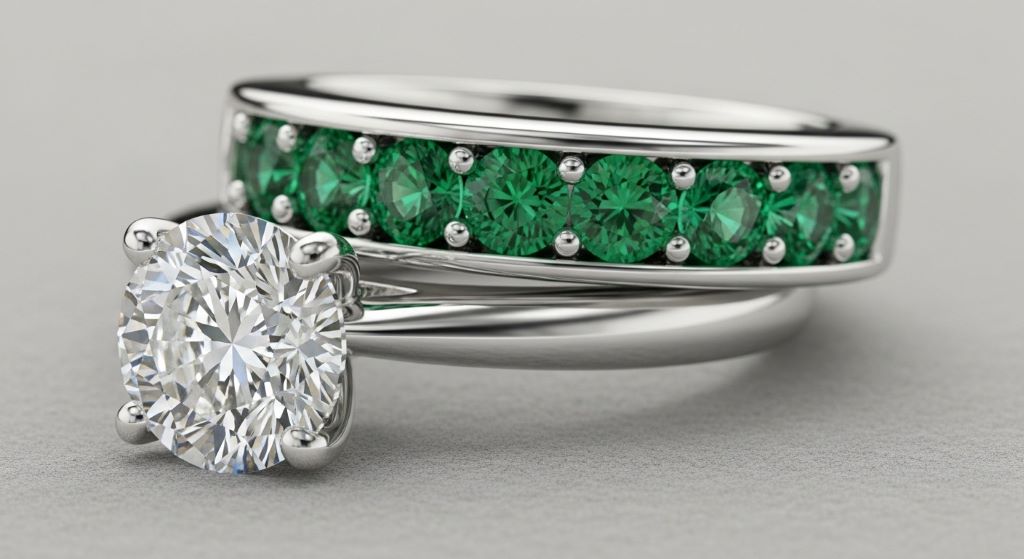
Color Intensity and Quality Considerations
Emerald color intensity ranges from light green to deep forest tones. Darker, more saturated emeralds create dramatic contrast with clear diamonds. However, ensure consistent color across all band stones.
Colombian emeralds display the most prized deep green with slight blue undertones. Zambian emeralds offer darker green with subtle blue tints. Meanwhile, Brazilian emeralds tend toward lighter, yellower greens.
Clarity grades matter less for emeralds than diamonds. Nearly all emeralds contain visible inclusions called jardin, French for garden. Therefore, expect some internal characteristics in natural emeralds.
Treatment disclosure remains essential when purchasing emerald bands. Most emeralds undergo oil or resin treatments enhancing clarity. Additionally, understanding treatments helps establish appropriate care routines.
Request certification from reputable gemological laboratories for valuable emerald bands. Certificates document origin, treatments, and quality characteristics. Moreover, certification aids insurance documentation and future appraisals.
Spacing and Stacking Options
Wearing rings directly stacked creates traditional, cohesive appearances. The emerald band sits flush against the engagement ring without gaps. This classic approach works best when both rings feature similar widths.
Adding spacer rings between engagement and wedding bands creates modern, personalized stacks. Thin plain metal bands separate colored stones from diamonds. Therefore, each ring receives individual attention while maintaining unity.
Curved or contoured wedding bands accommodate solitaire settings perfectly. These shaped bands wrap around center stones without gaps. Additionally, contoured designs work beautifully with cathedral or raised settings.
Wearing the wedding band above the engagement ring offers unconventional styling. This arrangement places emerald color closer to fingertips. However, traditional etiquette suggests wearing wedding bands closest to the heart.
Enhancing Your Stack with Additional Bands
Anniversary bands featuring alternating diamonds and emeralds create balanced stacks. This combination incorporates both gemstones in complementary proportions. Moreover, anniversary bands commemorate relationship milestones meaningfully.
Plain metal bands in complementary finishes add dimension without competing colors. Hammered, milgrain, or engraved bands provide textural interest. Therefore, mixed-metal stacks gain complexity while remaining wearable.
Colored gemstone bands beyond emeralds introduce additional personality. Sapphires, rubies, or birthstones create rainbow stacks celebrating family. However, limit stacks to three or four rings for comfortable wear.
Alternating band widths creates visual rhythm in multi-ring stacks. Thin, medium, and thin patterns prevent monotony. Additionally, varied widths help individual rings maintain distinct identities.
Caring for Emerald and Diamond Ring Combinations
Clean emerald bands gently using lukewarm water and mild soap. Soft brushes remove debris without scratching stones or metal. However, avoid ultrasonic cleaners, which may damage emerald treatments.
Remove rings during household cleaning, gardening, or exercising. Chemicals and physical impacts threaten both emeralds and settings. Therefore, establishing removal habits preserves long-term beauty.
Professional inspections every six months ensure prongs remain secure. Jewelers identify loose stones before loss occurs. Additionally, professionals can re-oil emeralds as needed.
Store emerald and diamond rings separately in soft pouches. This prevents harder diamonds from scratching softer emeralds. Moreover, individual storage protects settings from tangling damage.
According to the Gemological Institute of America, emeralds require gentler care than diamonds due to their fracture-filled nature and treatments.
Budget-Friendly Emerald Band Options
Lab-created emeralds offer identical appearance at lower costs. These synthetic stones display the same chemical composition as natural emeralds. However, they lack natural rarity affecting resale value.
Smaller emerald sizes reduce costs while maintaining visual impact. Multiple small stones create continuous color at affordable prices. Therefore, size doesn’t necessarily determine beauty or effectiveness.
Alternative green gemstones like tsavorite or green sapphire provide durability advantages. These stones rate higher on hardness scales than emeralds. Additionally, they often cost less while offering similar color.
Vintage and estate emerald bands frequently offer exceptional value. Pre-owned rings feature quality craftsmanship at reduced prices. Moreover, vintage pieces provide unique designs unavailable in contemporary jewelry.
Lifestyle Considerations for Emerald Bands
Office environments suit emerald wedding bands perfectly. Professional settings appreciate sophisticated, colorful jewelry. However, ensure workplace dress codes permit colored gemstones.
Active lifestyles require protective settings like channels or bezels. Prong-set emeralds face higher damage risks during physical activities. Therefore, setting style matters as much as stone quality.
Frequent hand-washing and sanitizer use affects emerald treatments over time. Minimizing chemical exposure preserves stone appearance. Additionally, removing rings before washing extends their lifespan.
Climate considerations impact emerald care requirements. Extreme temperature changes may affect treatments and settings. Nevertheless, normal seasonal variations pose minimal risk to quality bands.
Creating Your Perfect Combination
Try on multiple emerald band styles with your engagement ring before purchasing. Jewelers allow comparison of widths, settings, and metal types. This hands-on approach reveals unexpected preferences.
Photograph different combinations from various angles. Images help evaluate proportions and color balance objectively. Moreover, photos facilitate discussions with partners and jewelers.
Consider custom design for truly unique emerald bands. Custom creation ensures perfect fit around solitaire settings. Additionally, bespoke jewelry expresses individual style preferences precisely.
Trust personal preference over trends when selecting emerald bands. Your rings should reflect your aesthetic and lifestyle. Therefore, choose combinations bringing you consistent joy.
Conclusion
Styling emerald wedding bands with solitaire engagement rings creates beautiful, personalized bridal sets. The vibrant green stones complement diamond brilliance while expressing individual style. Consider metal type, band width, emerald arrangement, and lifestyle needs when making selections. Additionally, proper care ensures your emerald and diamond combination remains stunning throughout your marriage. Whether choosing full eternity designs, delicate half bands, or custom creations, emerald wedding bands offer distinctive alternatives to traditional diamond options. Therefore, couples seeking meaningful, colorful symbolism find emerald bands perfectly complement their solitaire engagement rings.
Frequently Asked Questions
Can emerald wedding bands be worn daily with solitaire engagement rings?
Yes, emerald wedding bands work for daily wear with proper care. Choose protective settings like channel or bezel mounting for active lifestyles. Remove rings during harsh chemical exposure or physical activities to prevent damage.
What metal color looks best with emerald wedding bands and diamond solitaires?
White gold and platinum create the most dramatic contrast, making emeralds appear more vibrant. However, yellow gold offers vintage charm, while rose gold provides contemporary warmth. Match metals between both rings for cohesive styling.
How wide should an emerald wedding band be to complement a solitaire ring?
Band width between 2 and 3 millimeters suits most solitaire engagement rings. Thinner bands work with delicate solitaires, while wider bands balance larger center stones. Ensure your chosen width sits comfortably against your engagement ring setting.
Are emerald wedding bands more expensive than diamond bands?
Emerald bands typically cost less than diamond equivalents of similar quality. However, prices vary based on emerald origin, color intensity, and clarity. Colombian emeralds command premium prices, while lab-created options offer budget-friendly alternatives.
Do emerald wedding bands require special maintenance compared to diamond bands?
Yes, emeralds need gentler care than diamonds. Clean with mild soap and water only, avoiding ultrasonic cleaners. Professional jewelers should periodically re-oil emeralds to maintain their appearance and protect treatments.
Related Topics:
The County of Surrey is perfect for vibrant Indian Weddings
Must-Try, Revolutionary Wedding Prep



+ There are no comments
Add yours