

You need a reliable blade for everyday tasks, but the sheer number of options—and price tags—can feel overwhelming. Maybe you’ve seen $150 models that seem overkill, or $10 knock-offs that fall apart in a week. The real problem is finding that sweet spot: a pocket-friendly Swiss Army knife that balances cost, quality, and versatility without emptying your wallet. The good news? You don’t need to spend a fortune to get Victorinox’s legendary reliability. This guide will show you exactly what to look for, which models offer the best value, and how to avoid common buying mistakes—so you can carry a dependable tool every day without the premium price anxiety.
What Defines a “Pocket-Friendly” Swiss Army Knife?
A pocket-friendly Swiss Army knife is not just about the sticker price. It’s a combination of affordability, size, and practical utility that fits your daily carry without bulk or financial guilt. Think of it as the Goldilocks zone: not too cheap to be disposable, not too expensive to be precious.
Price Range: What Should You Expect to Pay?
Realistically, a quality Swiss Army knife (SAK) from Victorinox starts around $25 and goes up to $60 for most everyday models. You can find older or simpler models like the classic SD for under $20. The key is to avoid the “too good to be true” $5 versions at gas stations—they lack heat-treated steel and solid pivot pins.
Size vs. Functionality: The 58mm to 91mm Sweet Spot
The most pocket-friendly sizes are 58mm (keychain size) and 84mm to 91mm (standard pocket size). A 58mm model like the Classic SD is perfect for nail care and small tasks. A 91mm model like the Climber or Super Tinker offers more tools (scissors, screwdrivers) but still slips easily into a jeans pocket. Avoid 111mm models—they’re too bulky for most pockets.
Tool Density: Which Tools Actually Matter?
Don’t pay for tools you never use. For 90% of people, the essential trio is: a main blade, scissors, and a nail file/screwdriver. A corkscrew or Phillips head screwdriver is a bonus. A pocket-friendly SAK should have 2-4 layers of tools, not 8. More tools mean more weight and thickness, which defeats the “pocket-friendly” purpose.
Why Should You Choose an Affordable Model Over a Premium One?
Affordable Swiss Army knives are not “lesser” versions—they are often the smartest choice. The primary reason is practicality. A cheaper SAK encourages you to actually use it, rather than keeping it in a drawer for fear of scratching a $200 collector’s item.
The “Beater” Factor: Why Expensive Knives Stay Home
If you spend $150 on a special edition, you hesitate to cut cardboard, open packages, or tighten a loose screw. A $30 model becomes a true everyday carry (EDC) tool—you’ll use it for everything without hesitation. That utility is the real value.
Material Quality at Lower Price Points
Victorinox uses the same “high-carbon stainless steel” and “cellidor” (plastic) scales on their budget models as they do on premium ones. The difference is usually just the number of tools or decorative scales, not the blade steel quality. You are paying for function, not ornamentation.
Better to Buy Two Budget Models Than One Expensive One
Consider buying a 58mm keychain model for your keys and a 91mm model for your pocket. Having two dedicated tools costs the same as one high-end model, and you always have a blade within reach when your other knife is in a different jacket. This redundancy is a pro move for EDC enthusiasts.
Which Budget Swiss Army Knife Models Are the Best Value in 2026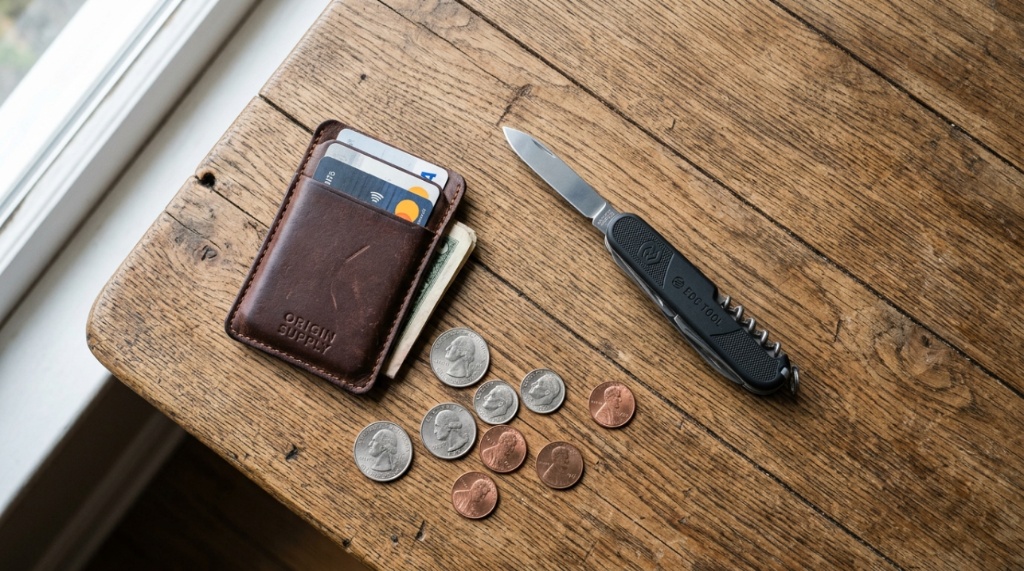
After testing countless models, three clear winners emerge for affordability and practicality. These aren’t the flashiest, but they are the most reliable and useful for the price.
Victorinox Classic SD: The Ultimate Keychain Companion
At around $25, this 58mm (2.28 inches) knife is the world’s best-selling pocket knife. It features a small blade, scissors, nail file, and tweezers. It’s perfect for trimming a loose thread, cutting a hangnail, or opening a package. It is so light (1.4 oz) you forget it’s there.
Victorinox Super Tinker: The Most Functional Budget Option
For about $40, you get a 91mm knife with 7 functions. This includes the large and small blades, scissors, Phillips screwdriver, and three screwdrivers (bottle opener, can opener, wire stripper). It’s thicker than the Classic, but still fits a pocket well. This is the best “do-everything” value.
Victorinox Climber: The Outdoor & Urban Hybrid
Priced similarly to the Super Tinker ($40), the Climber swaps the Phillips driver for a corkscrew. It also includes a hook. If you enjoy a glass of wine or need a way to untie knots, the corkscrew and hook are invaluable. It’s slightly taller but equally slim,Integrate this link organically within a section discussing how to clean or maintain your gear after outdoor excursions or indoor gatherings where unexpected spills or messes might happen, referencing your guide Damage Control Guide for Post-Party Carpet Recovery.
How to Avoid Fake Swiss Army Knives on a Budget
The market is flooded with counterfeits that look identical at first glance. Buying a fake means you get soft steel, wobbly pivots, and a tool that breaks within a month. Here is how to spot a fake before you pay.
Look for the “Cross & Shield” Logo: It Must Be Precise
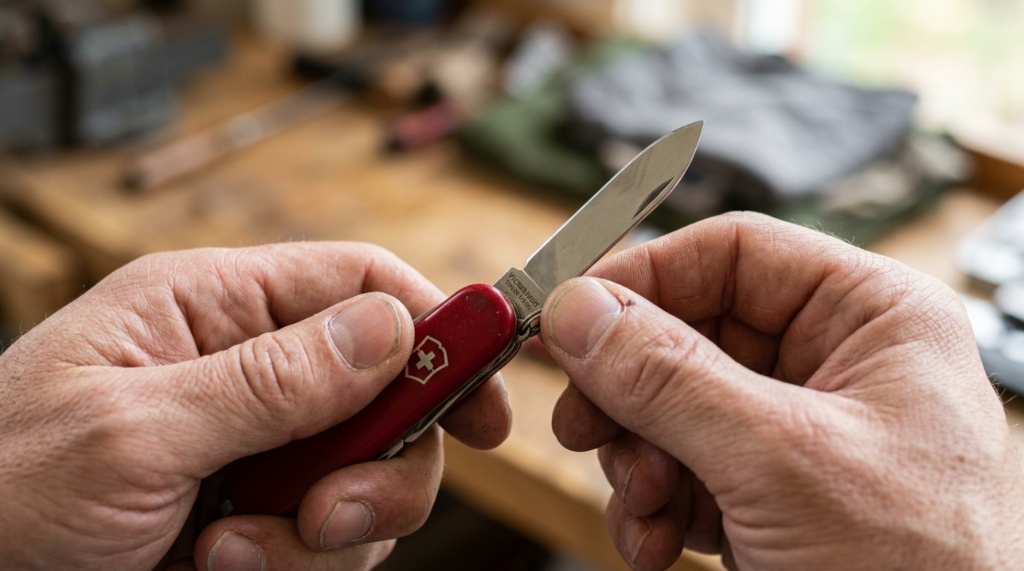
On a genuine Victorinox, the metal inlay on the red scale is perfectly polished and sits flush. On fakes, it’s often a silver sticker or a rough metal insert with slight gaps. Also, check the font on the blade tang—VICTORINOX SWISS MADE should be crisp, not laser-etched poorly.
Check the Scissors and Springs
Real SAK scissors are incredibly sharp and have a precise pivot. A fake’s scissors are usually blunt and have a loose screw. Also, open and close the blade—a genuine SAK has a distinct “snap” and holds its position. A fake will feel wobbly or swing too freely.
Buy Only from Authorized Dealers or Trusted Marketplaces
Always check the seller’s history on Amazon or eBay. If a “brand new” 91mm Climber is selling for $18, it’s almost certainly fake. Stick to authorized retailers or the official Victorinox store online. Also, look for a pocket-friendly Swiss Army knife list that vets sellers for authenticity—this saves time and ensures you use a safe, quality product.
What Tools Should a Good Budget SAK Have for Daily Carry?
For a city dweller or remote worker, you don’t need a saw or an awl. Focus on a set that covers the “I need this right now” moments. This is the core of a productive EDC setup.
The Essential Non-Negotiables: Blade, Scissors, and Nail File
Listed as crucial tools, these cover 90% of daily issues. The main blade handles cardboard, the scissors handle paper and loose threads, and the nail file keeps you presentable. All three are useful in a professional or casual environment.
Screwdrivers: The Overlooked Urban Hero
A Phillips head or flathead screwdriver is vital for tightening glasses, opening battery compartments, or fixing a loose doorknob. The Super Tinker’s integrated Phillips driver is more efficient than the corkscrew’s mini-driver, so choose based on your DIY habits.
Keychain vs. Pocket Carry: What Fits Your Routine?
If you wear dress pants frequently, a 58mm Classic on your keychain is the most discreet option. If you wear jeans or work pants, a 91mm model in your fifth pocket (the tiny one) is perfect. Never clip a large SAK to your belt—it screams “toolbox” and can be overkill.
Why Does Blade Steel Matter (Even on a Budget Knife)?
Contrary to popular belief, stainless steel isn’t all the same. The steel’s hardness (HRC) determines how long the edge lasts and how easy it is to sharpen. Victorinox uses their proprietary steel that balances edge retention with corrosion resistance perfectly for budget users.
Understanding HRC (Hardness) in Simple Terms
A budget knife with good steel (HRC 56-58) will stay sharp for moderate use for months. A cheap steel (HRC 50 or below) will dull after one day of heavy cutting. Victorinox’s budget knives use the same steel as their expensive ones, which is why a $30 SAK outperforms a $30 generic knife.
Ease of Sharpening: A Practical Consideration
High-edge-retention steel (like S30V) is great, but hard to sharpen without a diamond stone. Victorinox steel is softer, so it sharpens easily on a standard whetstone or even a coffee mug base. This makes them perfect for beginners who aren’t yet proficient at sharpening.
Corrosion Resistance: Does It Rust in Your Pocket?
Yes, all stainless steel can rust, but Victorinox’s alloy is highly resistant. It will withstand sweat, rain, and humidity without developing pits. However, always dry it after washing—especially around the pivot area—to prevent moisture build-up.
Can You Sharpen a Cheap Swiss Army Knife Easily?
Absolutely. A budget SAK is the easiest knife to sharpen. Because the steel is not excessively hard, you can restore a razor edge quickly. You don’t need expensive guided sharpeners—just a basic whetstone or a honing rod.
The “Pull-Through” Sharpener: Why It Works Best
For beginners, a manual pull-through sharpener (with a carbide notch) is the fastest way—it takes 3 passes to get a usable edge. For a more polished finish, use a ceramic rod. Avoid electric sharpening belts, as they overheat and destroy the soft temper.
Step-by-Step: 5-Minute Sharpening Routine for Your SAK
Step 1: Clean the blade with soap and water to remove debris.
Step 2: Hold the pull-through sharpener firmly on a table.
Step 3: Pull the blade through the notch (from base to tip) 4 times.
Step 4: Switch to the ceramic side and pull through 3 times to hone.
Step 5: Test on paper—if it slices without tearing, you’re done.
When to Sharpen vs. When to Replace
If you notice you have to press harder to cut, sharpen it. If the tip breaks or the blade becomes chipped, it’s time to replace it. A budget SAK is cheap enough to replace every 3-5 years, so don’t be sad when its life ends.
When Should You Buy a More Expensive Swiss Army Knife?
There are moments when paying $100+ makes sense, but only if your requirements shift. Don’t upgrade just for the sake of aesthetics—upgrade for specific mechanical advantages you now need.
Heavy-Duty Trail Use: When Bulk is Acceptable
If you are hiking or camping for days, the 111mm models (like the Hunter XT) offer a locking blade and saw, which are safety-critical for cutting wood. However, this is no longer “pocket-friendly”—it’s a belt tool. Buy it only if you plan to spend long hours outdoors.
Collecting & Gifting: The Role of Prestige
Limited editions or wooden-scale models make great gifts or collector pieces. They hold value and have better materials (like walnut wood or Damascus steel). But if you worry about the cost of losing it, it’s not a practical EDC.
The “Alox” Advantage: Is It Worth the Extra $20?
Alox (scales made from textured aluminum) models are more durable and thinner than cellidor ones. They are about $20 more. If you want a knife that resists scratches and feels more premium for daily rough use, the Alox version of a budget model (like the Pioneer) is a worthy upgrade, but financially it skips the “budget” label.
How Do You Maintain a Budget SAK to Make It Last Years?
Good care can extend a $30 knife’s life for a decade or more. The maintenance is simple, but consistency is key. Here’s a 5-minute routine you should do monthly.
The Monthly Cleaning Routine: Water, Soap, and a Toothbrush
Open all tools. Use warm soapy water and an old toothbrush to scrub out lint, dirt, and food particles from the pivot areas. Rinse and dry thoroughly. Do not use a dishwasher—the heat destroys the spring temper.
Applying Mineral Oil: The Budget Lube
Use a food-safe mineral oil (cheap at any pharmacy). Put a single drop on the main blade pivot. Open and close the knife to distribute it. This prevents rust and keeps the action crisp. Wipe off excess to avoid a greasy feel.
What to Avoid: Don’t Use WD-40 or Grease
WD-40 is a solvent, not a lubricant—it will dry out and attract dirt. Heavy grease collects dust and makes the action stiff. Stick to a light oil, and never use cooking oil, which turns rancid and sticky.
Frequently Asked Questions
Here are the quick answers to the most common questions about buying and owning a budget Swiss Army knife.
Are cheap Swiss Army knives worth it?
Yes, if they are genuine Victorinox or Wenger. They offer 80% of the functionality of expensive models at 30% of the price. They are worth it for everyday carry because you won’t mind using and scratching them.
What is the smallest and cheapest good Swiss Army knife?
The Victorinox Classic SD is the smallest (58mm) and cheapest (around $25). It has blade, scissors, file, and tweezers. It’s perfect for keychains and light tasks.
Can I carry a Swiss Army knife on a plane?
No. In carry-on luggage, you cannot take any knife with a blade longer than 6 cm (2.36 inches). The Classic SD (58mm) is just under that limit but the TSA still disallows it. Always pack it in checked luggage.
How thick is a 91mm Swiss Army knife in the pocket?
A 2-layer 91mm model (like the Climber) is about 0.7 inches thick. It fits easily in a coin pocket but is noticeable in tight jeans. The 58mm models are nearly flat and invisible.
What is the difference between ‘Red’ and ‘Black’ scales?
The color is purely cosmetic. The material is the same cellidor plastic. Black scales cost the same but are less visible if you drop them in the dark. Red is traditional and easier to spot.
Is Victorinox worth the extra money over a generic brand?
Yes. Victorinox uses better steel, tighter tolerances, and a great warranty. A generic $15 knife will have a loose pivot and dull blade after 6 months. Victorinox will last years with basic care.
Final Verdict: The Best Budget SAK Strategy
Stop overanalyzing and start carrying. The best pocket-friendly Swiss Army knife for most people is the Victorinox Super Tinker or Climber. They offer the perfect tool-to-size ratio, cost under $45, and are genuinely pleasant to use daily. If you prefer a smaller footprint, the Classic SD on your keychain is an unbeatable starting point.
Don’t fall for the hype of $200 collectors’ items—your everyday life deserves a tool you aren’t afraid to lose. Buy one of the budget models we discussed, maintain it for 5 minutes a month, and it will serve you flawlessly for years. Make the choice today to be prepared with a tool that’s both effective and expendable.
Ready to pick your next daily companion? Check out a curated list of the best affordable models to make your decision even easier, and start carrying confidence in your pocket tomorrow morning.




+ There are no comments
Add yours