


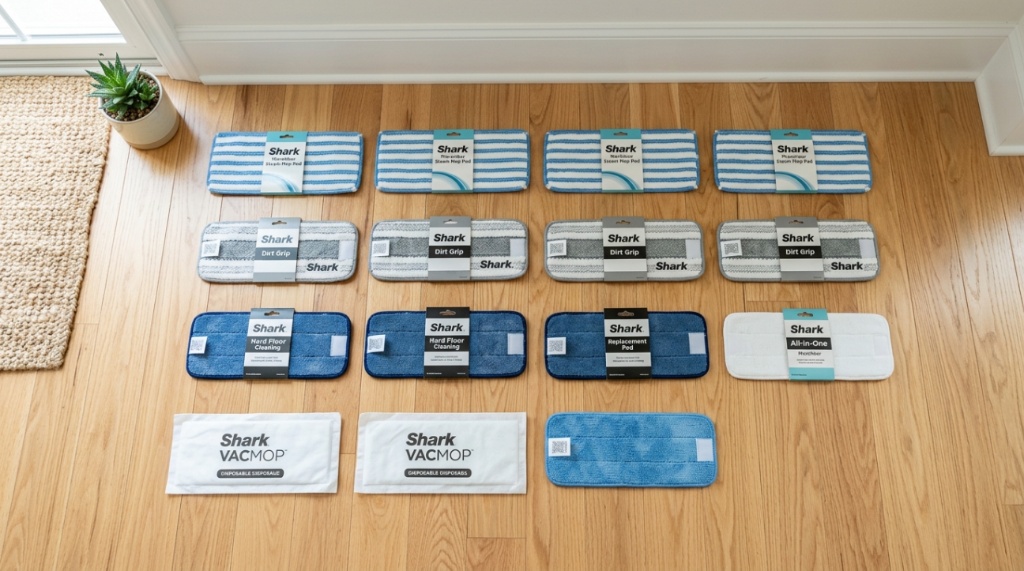
If you own a Shark vacuum or floor cleaner, you already know how well these machines perform. But the real secret to a spotless home lies in the pads attached to the bottom. Choosing the wrong pad—or a low-quality knockoff—can leave streaks, miss stubborn grime, or even damage your flooring over time. With North Carolina’s mix of red clay dirt, humid summers, and everything from hardwood to tile and carpet in between, finding the right cleaning pad isn’t just a minor purchase; it’s a decision that affects how your floors look every day. In this guide, we’ll break down exactly how to select the best Shark floor pads in NC for your specific home, cleaning habits, and flooring type, so you can stop guessing and start cleaning smarter.
Key Takeaways
- Shark pads are not one-size-fits-all; the material and design determine whether they are safe, effective, and long-lasting for your specific floor type.
- North Carolina’s soil, humidity, and common flooring installations create unique cleaning demands that should dictate your pad choice.
- Genuine Shark pads typically offer better durability and fit, but high-quality third-party options can be excellent—if you know what to look for.
- Understanding the difference between washable microfiber, disposable, and specialty pads (like those with scrub strips or polishing fabric) will save you money and frustration.
- Proper care habits, like using the right cleaning solution and drying methods, are just as important as the pad itself.
Understanding Your Shark Model and Pad Compatibility
Before you look at materials or brands, you must know which Shark device you own. Shark has a massive lineup, and they all use proprietary mounting systems. Trying to force a pad that doesn’t fit your model is a waste of time and money. The safest approach is to check your device’s model number—it’s usually printed on the back of the unit or underneath the water tank.
Steam Mops vs. Cordless Vacuum Mops
Most homeowners searching for Shark floor pads fall into one of two categories: those who own a traditional Shark steam mop (like the S1000 or S7001) and those who own the increasingly popular Shark Navigator Lift-Away or the Sonic Duo. The steam mops typically use rectangular, plush microfiber pads that attach via a pocket or a quick-release clip.
Cordless systems like the Shark HydroVac or the ICZ300 series use a combo pad that often has a scrubber strip in the center and microfiber on the outer edges. These are specifically engineered to handle wet and dry debris simultaneously. Make sure you identify whether your device is a dedicated steam mop or a vacuum-and-mop combo, as the wet/dry functionality changes the pad structure completely,For a complete home maintenance routine, check out our guide on how to clean dryer vents with any vacuum brand to keep your household running safely.
Matching the Pad Material to North Carolina Flooring
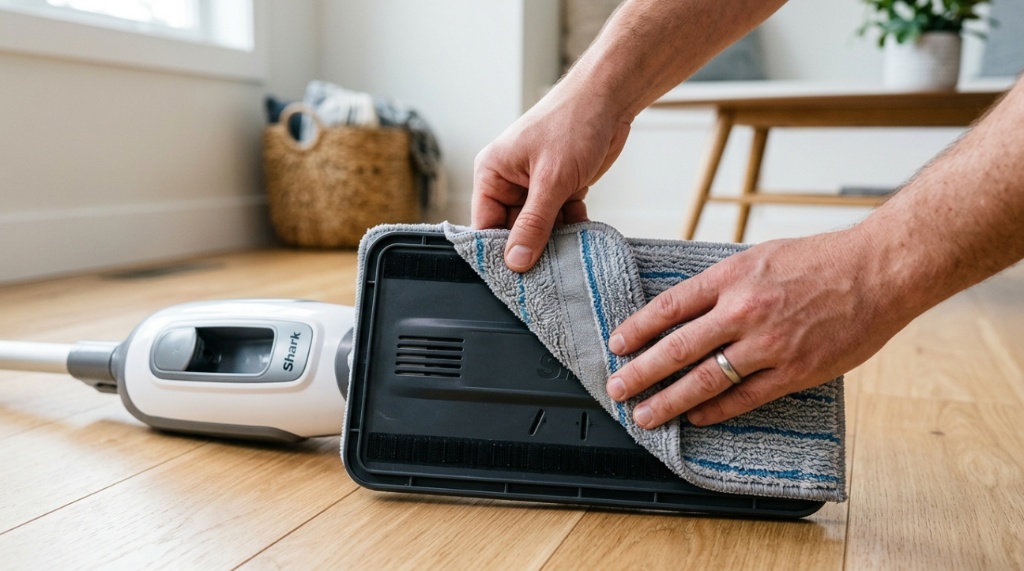
North Carolina homes feature a diverse mix of flooring. You might have carpet in the bedrooms, hardwood in the living room, and tile in the bathroom. No single pad will be ideal for every surface in your house, which is why many people end up buying multiple types. Let’s break down the best materials for the most common surfaces in NC homes.
Hardwood and Laminate: The Delicate Balance
For hardwood and laminate, you need a pad that is absorbent but not abrasive. Look for pads labeled “fine” or “polishing.” These have dense, ultra-thin microfiber loops that pick up fine dust without scratching the urethane finish. Avoid pads with heavy scrub strips here, as the abrasive material can dull the finish over time, especially with the dirt and tracked-in sand common in coastal and piedmont regions of NC.
A crucial consideration for hardwood in NC is the humidity. In summer months, hardwood expands; in winter, it contracts. A pad that is too wet can cause water to seep into the seams, leading to swelling. For these floors, you want a pad with a lower water retention profile—meaning it holds the cleaning solution tightly rather than releasing it all at once.
Tile, Grout, and Stone: Heavy Cleaning Duty
Tile and grout lines in NC kitchens and bathrooms can discolor quickly due to hard water and tracked-in dirt from gardens or driveways. For these surfaces, you want a pad with a built-in scrub strip or a “scour” texture.
These pads are usually thicker and feature a woven, abrasive band in the middle. This strip allows you to focus on stubborn stains without having to get on your hands and knees. However, be careful with natural stone (like slate or marble), which is common in upscale NC homes. Scrub strips can be too harsh for porous stone. In this case, a white or light-colored microfiber pad designed specifically for stone is the safer choice.
Washable vs. Disposable Shark Pads
One of the most significant decisions is whether to buy washable microfiber pads or disposable ones. This will affect your long-term cost and the consistency of your cleaning results.
The Durability of Washable Microfiber
Washable pads are the most popular choice for eco-conscious households. They are cost-effective in the long run and provide consistent thickness. A key insight here is that the pad’s performance declines after multiple washes if cared for poorly. You should never use fabric softener or bleach on Shark microfiber pads. These chemicals clog the pores of the microfiber, drastically reducing their absorbency—sometimes by up to 50%.
For NC homes dealing with heavy clay soil, washing these pads regularly means you’ll need to clean them in a way that removes deep grit. A quick rinse cycle isn’t enough. Rinse the pad under hot water before putting it in the washing machine to prevent soil from embedding permanently in the fibers.
When Disposable Pads Make Sense
Disposable pads are excellent for “quick cleans” or for households where the user does not want to handle dirty laundry. They are also ideal for cleaning up after renovations or for filtering out allergens, as you can simply throw them away. The trade-off is the recurring cost and the fact that many thin disposable pads do not hold up well to the abrasive grit of NC red clay, which can tear through cheap non-woven fabric quickly.
Key Features to Look For in High-Quality Pads
Whether you buy OEM (original equipment manufacturer) Shark pads or a reputable third-party brand, certain features indicate quality. Here is what separates a good pad from a frustrating one.
Density and GSM (Grams per Square Meter)
Do not just look at the surface fabric; feel the weight of the pad. Higher GSM means denser padding. A pad with a GSM of around 300 to 400 will hold a significant amount of liquid and provide a cushioned glide. Cheaper pads often have a lower GSM, meaning they feel flimsy, slip on the floor, and leave puddles. When shopping, look for listings that specify the GSM; if they don’t, they are likely hiding a low-quality fiber blend.
The Hook-and-Loop System and Fit
Shark uses a loop-and-hook (velcro) system on many models. Over time, these attachments can stretch. A high-quality pad will have a reinforced edge and a snug fit. If a pad is too loose, it will bunch up under the mop head, pushing dirt instead of picking it up. Cutting corners on fit is the number one mistake we see next to buying non-compatible sizes.
Common Mistakes NC Homeowners Make with Shark Pads
Even with the best pad, there are pitfalls that can ruin your floors. The most common issue is using too much cleaning solution. Shark steam mops generally require plain water or a Shark-approved solution. If you use a generic household cleaner, you risk creating a sticky residue that attracts more dust—a major problem in the high-pollen NC spring. Additionally, over-saturating the pad causes water to pool at the corners, which leaves streaks.
Another mistake is leaving the pad on the mop when not in use. If you leave a damp pad attached to the head, it can trap bacteria and develop a musty smell. In the humid NC climate, this mildew growth can happen overnight. Always remove the pad and allow it to air dry completely before discarding or washing.
Finally, beware of purchasing pads based on price alone. While genuine Shark pads are sometimes seen as pricey (around $20 for a two-pack), they are designed specifically for the heat output of Shark steam mops. Some third-party pads melt or lose their shape under high heat because they are not made with the same polyester/nylon blend standards.
How to Compare Brands and Save Money
If you want to save money, you can buy third-party pads, but you need to read reviews critically. Look for reviews from users who specifically mention the Shark model you own. A pad that is “compatible” with 20 different Shark models often fits none of them perfectly.
When comparing prices, calculate the cost per wash. A $14 pad that lasts 50 washes is cheaper than an $8 pad that falls apart after 10 washes. Also, consider the “certification” of the product. Look for pads that are Oeko-Tex certified, which means they are free from harmful substances—a crucial factor since you are spreading them across floors where toddlers and pets crawl.
Step-by-Step Guide to Prolonging Pad Life
Getting the longest life out of your Shark pads requires a simple but firm routine. Here’s how to do it in a way that works for busy NC households.
- Shake or vacuum the pad immediately after use: This removes dry debris before it grinds into the fibers.
- Rinse with cold water only: Hot water will set stains into the microfiber. Cold water flushes out the dirt molecules effectively.
- Wash on a gentle cycle: Use a mild detergent. Avoid all bleach and fabric softeners, as these destroy the splitting fibers that make microfiber effective.
- Air dry or tumble dry on low: High heat can warp the edges of the pad, preventing a flat fit on the mop head. If you use a dryer, hang them over the door or on a rack to preserve the Velcro backing.
- Replace every 3–6 months: Depending on usage frequency. If you notice the pad no longer picks up dust and just pushes it around, it is time to replace it.
A Summary of Pad Types and Their Best Use Cases
| Pad Type | Best For | Material & Style | Key Limitation |
|---|---|---|---|
| Plush Microfiber | Hardwood, Laminate, Daily cleaning | Dense, thick loops; highly absorbent | Not effective on dried-on grout stains |
| Scrub Strip Combo | Tile, Grout, Sticky residues | Microfiber outer band with rough inner strip | Too abrasive for hardwood and stone |
| Fine Polishing Cloth | Natural stone, Marble, Glass tile | Smooth, low-pile, tightly woven fabric | May require multiple passes on muddy patios |
| Disposable Non-Woven | Quick cleanups, Heavy allergy homes | Thin, Single-use, Static-charge material | High long-term cost, less absorbent |
Frequently Asked Questions
Can I use Shark steam mop pads on all floor types?
No. Using a scrub-strip pad on hardwood can damage the finish. Always read the label of the specific pad package to ensure it is safe for sealed hard surfaces versus tile or grout. When in doubt, use a plush microfiber pad, which is safest for most sealed floors.
How often should I replace my Shark floor pads?
If you clean weekly, expect to replace washable pads every 3 to 6 months. If the pad loses its shape, becomes threadbare, or fails to absorb water, replace it immediately. Disposable pads should be replaced after every single use.
Is it better to buy genuine Shark pads or generic brands?
Genuine Shark pads offer a guaranteed fit and are heat-proof for steam mops. Generic pads can work well and save money, but you risk poor fit or materials that degrade under high heat. If buying generic, prioritize high GSM and reviews mentioning your specific Shark model.
Can I wash Shark pads with vinegar or baking soda?
Yes, you can add a small amount of distilled white vinegar to the wash cycle to remove odors, but do not use vinegar as a cleaning solution in the mop itself. Vinegar can degrade the glue and fabric of the mop over time. For washing, a few tablespoons in the rinse cycle is safe.
Why is my Shark pad leaving black streaks on the floor?
This is usually caused by dirt trapped in the Velcro strip or the scrubber bar. The pad is dragging embedded grit across the floor. Wash the pad thoroughly, and if the streaks persist, the soleplate of your mop may need cleaning. This is a common issue with NC’s iron-rich clay, which can leave rust-like marks.
Conclusion
Selecting the best Shark floor pads in NC doesn’t have to be a guessing game. Start by identifying your Shark model and the specific surface you are cleaning. Remember that the humid and muddy conditions across North Carolina demand dense, durable microfiber for everyday messes and specialized scrub strips for stubborn grout. Balance your budget against the lifespan of the pad, and always prioritize a proper fit over a minimal price difference. By following these guidelines, you’ll protect your floors, extend the life of your carpet and tile, and get the spotless shine you expect from your Shark cleaner—every single time.



+ There are no comments
Add yours