Docking a boat in Florida comes with its own set of challenges. Between the intense summer sun, sudden afternoon thunderstorms, and the constant tidal movement, your dock lines take a beating. If you are shopping for new lines, you have probably noticed that prices vary wildly and materials range from basic twisted nylon to high-tech Dyneema. The real question is not just which line is the strongest, but which one offers the right balance of stretch, durability, and UV resistance for your specific slip. This guide breaks down exactly how to compare top rated marine dock lines FL boaters trust, focusing on the practical differences that matter most in a saltwater environment.
Why Standard Dock Line Advice Often Misses the Mark
Most generic advice about dock lines focuses on tensile strength. While strength is important, it is rarely the deciding factor for a boat that sits in a slip for months at a time. In Florida, the real enemies are UV degradation, chafe from concrete seawalls, and the constant stretching and relaxing from wind and wake. A line that is simply strong on paper might fail prematurely because it cannot handle abrasion or sunlight. When comparing lines, you need to look beyond the breaking strength and consider the construction, the fiber type, and how the line behaves under sustained load.
Key Criteria for Comparing Dock Lines
To make a fair comparison, you need to evaluate each line against the same set of standards. These five criteria will help you filter through the options and find a line that matches your boating habits and local conditions.
1. Fiber Type and Stretch Characteristics
The fiber determines how the line behaves under load. Nylon is the traditional choice for dock lines because it offers excellent elasticity. This stretch acts as a shock absorber, which is critical when a wake rolls through the marina. Polyester and polypropylene lines have less stretch, making them better for running rigging but less ideal for docking. For a permanent slip, a line that stretches 10-15% under load is generally preferred because it reduces the shock on your cleats and the boat’s hardware.
2. Construction: Three-Strand vs. Double Braid
Three-strand lines are simple, easy to splice, and have a rough texture that grips cleats well. However, they tend to flatten and wear faster when rubbing against a piling. Double-braid lines have a core and a cover, which provides a smoother surface and better abrasion resistance. The trade-off is that double-braid lines are more expensive and harder to splice. For a boat that stays in the water year-round, the extra cost of a double-braid line is often justified by its longer lifespan.
3. UV Resistance and Color Retention
Florida’s sun is relentless. UV rays break down the molecular structure of synthetic fibers, causing them to become brittle and lose strength. Look for lines that are treated with UV inhibitors or are made from fibers that naturally resist degradation. Darker colors tend to absorb more heat but often hide dirt and mildew better than light colors. While no line is completely immune to UV damage, a line with a tight weave and UV-stabilized additives will last significantly longer than a cheap, untreated line.
4. Abrasion Resistance
Chafe is the number one killer of dock lines in Florida. Seawalls are often rough concrete, and pilings are covered in barnacles. When the boat moves, the line rubs against these surfaces. A line with a braided cover offers better protection than a three-strand line because the cover takes the abuse while the core maintains the strength. Some premium lines include a chafe sleeve or a sacrificial outer layer that can be replaced. If your slip has a sharp edge, you should prioritize abrasion resistance over raw strength.
5. Diameter and Working Load
Bigger is not always better. A thicker line is harder to handle, takes up more storage space, and can be overkill for a small boat. The correct diameter depends on the boat’s displacement and the expected wind load. A general rule is to match the line size to the cleat size. If the line is too thick, it will not sit properly in the cleat. If it is too thin, it will cut into the gelcoat under stress. Check the manufacturer’s recommended working load, not just the breaking strength, and choose a line that gives you a safety factor of at least 5:1.
Comparing Line Materials: Nylon, Polyester, and Blends
Most dock lines fall into one of three material categories. Understanding the differences helps you avoid buying a line that looks good but performs poorly in your specific situation.
| Material | Stretch | UV Resistance | Abrasion Resistance | Best Use |
|---|---|---|---|---|
| Nylon | High (10-15%) | Moderate | Good | Primary dock lines, stern lines |
| Polyester | Low (3-5%) | Excellent | Excellent | Mooring pendants, permanent lines |
| Polypropylene | Low | Poor | Poor | Tow lines, temporary use |
Nylon remains the most popular choice for dock lines because its stretch protects the boat. However, polyester is gaining popularity for permanent moorings because it does not stretch as much, which means less boat movement against the dock. A blend of the two can offer a compromise, but you need to check the specific percentages. A line labeled “nylon blend” might contain only 50% nylon, which significantly reduces its shock-absorbing capability, While preparing your vessel for coastal cruising or relaxing on the water, remember that Sailboats have many health benefits for your physical and mental well-being.
How to Match the Line to Your Slip Configuration
The layout of your slip determines how many lines you need and what lengths are appropriate. A boat in a narrow canal with a fixed dock will have different requirements than a boat on an open bay with a floating dock.
Floating Docks vs. Fixed Docks
Floating docks rise and fall with the tide, which means the angle of the line changes constantly. You need a line with enough length to accommodate this vertical movement without becoming taut or slack. Fixed docks, on the other hand, require lines that can handle the changing water level without pulling the boat too close to the dock or allowing it to drift too far away. In both cases, a line with good elasticity is essential to prevent the boat from slamming into the dock during a passing wake.
Spring Lines and Breast Lines
Spring lines run diagonally from the bow or stern to a midship cleat. They prevent the boat from moving forward or backward. Breast lines run perpendicular to the dock and hold the boat close. When comparing lines, consider that spring lines often need to be longer than breast lines. A common mistake is buying all lines of the same length. You should measure the distance from your cleats to the dock cleats at both high and low tide to determine the correct lengths.
Common Mistakes When Buying Dock Lines in Florida
Even experienced boaters make errors when selecting dock lines. Avoiding these mistakes will save you money and prevent damage to your boat.
- Buying the cheapest line: A low-cost line may have a lower breaking strength and poor UV resistance, leading to failure within a year.
- Ignoring chafe protection: If you do not add a chafe guard, the line will wear through quickly on rough surfaces.
- Using the same line for all positions: Bow, stern, and spring lines experience different loads and angles. Using one size for all is inefficient.
- Over-tightening the lines: A line that is too tight has no room to stretch, which defeats the purpose of using nylon. Leave a slight sag to allow for movement.
- Forgetting to check for UV damage: Inspect your lines regularly for fraying, discoloration, or stiffness. Replace them before they fail.
Practical Tips for Extending the Life of Your Dock Lines
Once you have selected the right lines, proper maintenance will extend their lifespan. Rinse the lines with fresh water periodically to remove salt crystals that can abrade the fibers. Store spare lines out of direct sunlight when not in use. Rotate the lines end-for-end occasionally to distribute wear. Most importantly, inspect the lines every few months, especially before hurricane season. A line that looks fine on the outside may have a compromised core.
Frequently Asked Questions
What length dock lines do I need for a 30-foot boat?
For a 30-foot boat, you generally need lines that are at least 15 to 20 feet long for the bow and stern, and 10 to 15 feet for spring lines. However, the exact length depends on the distance from your cleats to the dock and the tidal range. It is better to have lines that are slightly too long than too short, as you can always adjust the knot.
Can I use the same dock lines for saltwater and freshwater?
Yes, you can use the same lines, but saltwater is more corrosive and abrasive. Lines used in saltwater will degrade faster due to UV exposure and salt crystal buildup. Rinsing them with fresh water after use will help prolong their life.
How often should I replace my dock lines?
There is no fixed timeline, but you should inspect them at least twice a year. If you see fraying, stiffness, or discoloration, replace them immediately. In Florida’s harsh climate, a line that is used daily may need replacement every 2-3 years, while a line used only on weekends might last 5 years.
Is a thicker dock line always stronger?
Not necessarily. A thicker line made from a weaker material can have a lower breaking strength than a thinner line made from a high-tenacity fiber. Always check the manufacturer’s specifications for breaking strength and working load, rather than relying on diameter alone.
What is the best knot for a dock line?
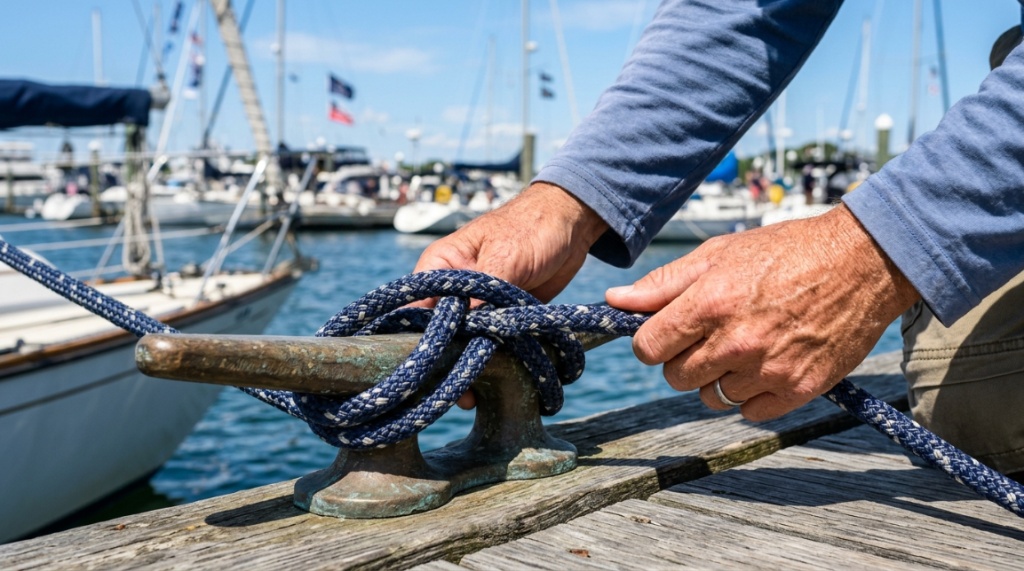
The cleat hitch is the most common and reliable knot for securing a line to a cleat. It is easy to tie and untie, even under load. For attaching to a piling, a clove hitch or a round turn and two half hitches are good options.
Conclusion
Comparing top rated marine dock lines in FL requires more than just looking at a price tag. You need to consider the fiber type, construction, UV resistance, and abrasion resistance to find a line that will hold up in the unique Florida environment. Prioritize nylon for its stretch, choose a double-braid for durability, and always add chafe protection where the line contacts rough surfaces. By measuring your slip carefully and avoiding common mistakes like over-tightening, you can keep your boat secure and your lines in good condition for years. Take the time to inspect your lines regularly and replace them at the first sign of wear. A reliable dock line is a small investment compared to the cost of repairing a damaged hull or replacing a lost boat.