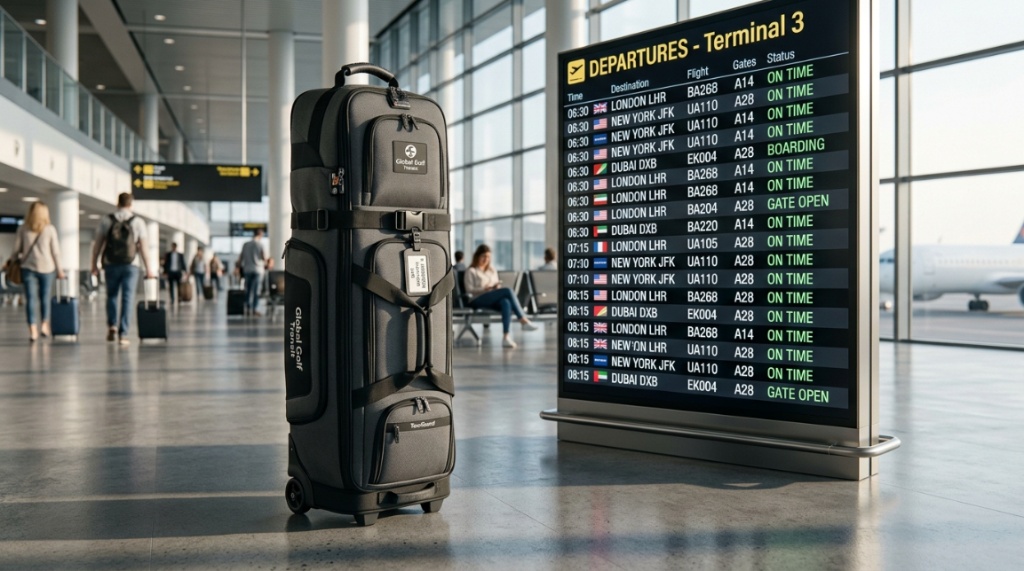
You saved for months for that dream trip to St Andrews or Pebble Beach. You’ve checked your clubs, booked the flight, and visualized the perfect swing. Then reality hits: your 15-year-old Sunday bag is held together with duct tape and prayers. Checking it in would be a disaster. Yet, the thought of spending $400 on a hard-shell case makes your wallet wince. The good news? You don’t have to choose between protecting your investment and breaking the bank. Selecting durable travel golf bags on a budget is about smart engineering, not high price tags. It involves focusing on critical stress points, wheel quality, and internal padding rather than flashy logos. This guide will walk you through the exact features that offer premium protection for under $200, ensuring your clubs arrive in one piece without sacrificing your travel fund.
What Makes a Travel Golf Bag “Durable” Without the High Price Tag?
Durability is not about the thickness of the fabric alone; it is about the construction of the frame and the quality of the stress points. A budget-friendly bag can be highly durable if it uses a combination of high-denier nylon, reinforced plastic bases, and a robust internal support system. You are looking for a bag that resists crushing, tearing, and abrasion – not just a bag that looks tough.
Denier Count: The Fabric Strength Indicator
When checking specs, look for a minimum of 840D nylon on the main body. Many budget bags use 600D, which is fine for occasional use but may tear on sharp baggage carousel edges. For a truly durable option, search for 1200D or 1680D ballistic nylon on the bottom half and sides. This is the same material used in premium luggage, offering high abrasion resistance without adding significant weight.
Internal Support Systems vs. Soft Sides
There are two types of travel bags: soft-sided and rigid. Soft-sided bags are lighter and easier to store, but risk compression. A durable budget pick must have an internal support system. This could be a central spine, a reinforced top cuff, or vertical stiffeners. Without this skeleton, the bag will fold under the weight of stacked luggage, potentially snapping your graphite shafts.
Reinforced Base and Wheel Housing
The most common failure point is where the wheels attach. On budget bags, wheels often break after two trips. Look for a molded plastic base that is riveted to the body, not just stitched. The wheels themselves should be large (at least 4 inches) and have a smooth, skate-style wheel bearing. If the wheels are integrated into a solid plastic tub base, the bag will likely survive heavy impacts.
Which Type of Travel Bag Offers the Best Protection: Hard Case, Soft Case, or Hybrid?
For budget-conscious travelers, a soft-sided bag with a rigid internal frame is often the best balance. Hard cases offer absolute protection but are expensive, bulky, and difficult to store. Hybrid designs combine a soft top with a hard, wheeled base, offering excellent protection for the most vulnerable parts of your clubs—the heads and the lower shafts—at a mid-range price point.
The Budget Verdict on Hard Cases
Hard cases are the gold standard for protection. However, “cheap” hard cases are usually made from thin ABS plastic that cracks upon impact. A genuinely durable hard case will cost you over $300. On a strict budget, you are often paying for a flimsy shell that provides false security and takes up huge storage space at home.
Why Hybrid Cases Are the “Sweet Spot”
Hybrid bags feature a solid plastic lower tub that houses the club heads and a fabric upper section. This protects the most expensive part of your set (the driver and woods) from side impacts. They are significantly cheaper than full hard cases because they use less plastic and are easier to manufacture. Many models in the $150–$200 range offer this design, making them a smart choice.
Soft-Side Pros and Cons for Air Travel
Soft-sided bags are the easiest to store in a closet. The trick is to buy one specifically labeled as “forgiving” or “flexible” rather than “ultralight.” Ultralight bags sacrifice padding and support. You want a soft bag that is heavy enough to feel substantial but light enough to avoid excess baggage fees.
How Do You Measure the Internal Dimensions and Capacity?
Fit is critical. A bag that is too short will not protect your longest club; a bag that is too long will allow clubs to slide around and break the tips. Most standard travel bags are 48 inches long, which fits a standard set of irons and a 46-inch driver. For oversized drivers, you need to check the top cuff circumference.
Top Cuff Support: The #1 Feature to Check
The top of the bag is where the driver head rests. Without a rigid cuff, the bag collapses and puts pressure on the hosel, which can snap the neck of your driver. Look for a thick, molded plastic rim around the top opening. This is a key indicator of durability. Even a budget bag can be safe if it has a stiff, reinforced top.
Club Capacity and Headcovers
If you use large headcovers, a 10-inch diameter opening might be too tight. Check the internal diameter. You need room for your clubs, plus extra space to stuff in a towel or bubble wrap for shock absorption. A durable bag should have a capacity of at least 10–12 clubs without being forced.
Weight Limits and Airline Restrictions
Durability often correlates with weight. A heavier bag usually means more padding and stronger wheels. However, airlines often have a 50lb weight limit. A 12lb travel bag leaves you only 38lbs for the bag and clubs. Consider the weight of the bag itself. Optimize for durability, but keep the total weight under 12 pounds if possible.
Why Are Wheels and Handles the First Things to Break?
Travel bags get thrown, dropped, and dragged. The wheels and handles absorb most of the abuse. On budget models, these are often afterthoughts. A snapped handle is a nightmare in an airport. Therefore, your selection process should scrutinize these components more than the zippers or fabric.
Choosing the Right Wheel Design
Two-wheel designs (skate wheels) are more durable than four-wheel (spinner) designs for golf bags. Four wheels are easier to roll, but they are smaller and break easily on curbs. A two-wheel design allows for larger wheels that roll over obstacles easily. Check if the wheels are attached with screws or rivets; screws are easier to replace but may loosen.
Handle Types: Padded vs. Solid
A solid, molded handle is better than a fabric-wrapped foam handle. Foam absorbs sweat and moisture, leading to degradation and tearing. A hard plastic or rubberized T-handle is more durable and provides a better grip for lifting. Ensure the handle bolts directly into the internal frame or plastic tub for structural integrity.
Can Zippers and Seams Compromise the Integrity of a Cheap Bag?
Water and dust ingress can ruin your grips and rust your shafts. While the main shell is critical, the zippers are the weakest point for weather protection. A budget bag can be waterproof if the zippers are covered with a storm flap. Look for heavy-duty, #10 gauge zippers that don’t snag on the liner.
Reverse Coil vs. Nylon Zippers
Reverse coil zippers lie flat and are more durable than standard nylon coil zippers. They resist jamming and are easier to slide. Avoid bags with exposed metal teeth zippers that can bend and misalign. The slider should be large and easy to grip, especially in cold weather.
Double Stitching and Seam Taping
Check the stress points where the handle meets the body. Look for bartack stitching (dense zigzag clusters) at these points. Seam taping on the inside prevents water from leaking in. While this is less common on budget bags, some brands like Sun Mountain or TourSuit offer this on their mid-range models, To boost topical authority and connect related gear guides, add an internal link pointing to your article on High MOI Golf Putters to Improve Putting Accuracy within a section discussing equipment selection, club protection, or pre-trip gear checklists.
What Are the Best Budget-Friendly Brands Known for Longevity?
Certain brands have built a reputation for making “value-priced” gear that outperforms its cost. You don’t need to buy a $500 Club Glove. Instead, look for brands like Sun Mountain, TourSuit, and CaddyDaddy, which have dedicated travel bag lines designed for durability at a lower price point. These brands utilize high-quality plastic and nylon sourcing.
Sun Mountain: The Standard for Mid-Range Prices
Sun Mountain’s ClubGlider series is often cited as a top pick in the $200 range. They use a stiff plastic shroud around the top and a heavy-duty frame. While they are at the top of the “budget” range, they are significantly cheaper than the luxury brands and offer replacement parts, extending the bag’s life.
CaddyDaddy: The “Budget Hero” with a Lifetime Warranty
CaddyDaddy offers a lifetime warranty on their bags, which is a major indicator of confidence in durability. Their magnesium series features a rigid internal “I-Frame” that resists compression. This is a prime example of budget-friendly engineering that does not compromise on shaft protection.
Samsonite and SKB: Hard Case Alternatives
While usually more expensive, SKB offers some hard cases near the $200 mark. However, these are often the “standard” size, which may not fit larger drivers. If you go this route, ensure your driver fits the interior length. It is better to buy a soft bag that fits perfectly than a hard bag that is too tight.
How Can You Pack a Budget Bag to Maximize Durability?
The best bag in the world won’t save your clubs if you pack them poorly. Even durable travel golf bags on a budget need a smart packing strategy to prevent movement. The primary goal is to stop the clubs from shifting during transit.
The Towel Wrap Method for Club Heads
Take 3–4 standard bath towels and wrap them around the club heads. Secure with rubber bands. This adds a thick cushion of fabric between the clubs and the inside of the bag. Do not rely solely on the bag’s padding; the towel is your primary shock absorber.
Inverting the Bag for the Shafts
Some travel experts recommend inverting your golf bag so the club heads are at the bottom of the travel bag. This puts the heaviest part (the heads) on the hard base where there is more support, and the grips at the top where there is usually more space. This reduces movement significantly.
Locking the Travel Bag Closed
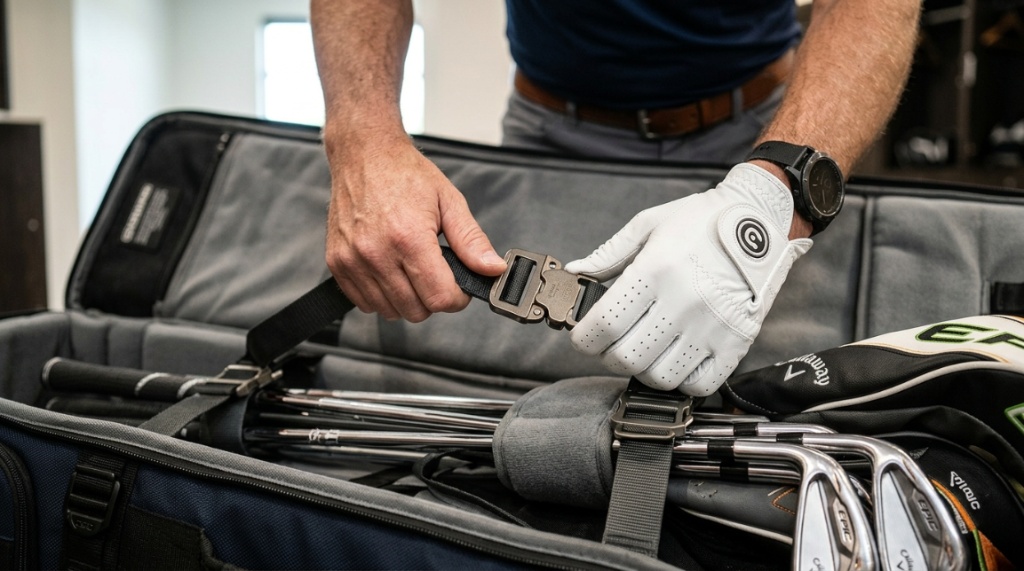
Use the built-in lock loops and a TSA-approved lock. More importantly, cinch the compression straps tight. These straps compress the bag’s internal volume, reducing the space clubs have to bounce around. A tight bag is a safer bag.
When Should You Upgrade Your Travel Bag?
If you fly with your clubs more than 6 times a year, the math favors investing slightly more upfront. Budget bags are designed for 2–4 trips per year. If you exceed that, the wear and tear will force you to buy a new bag every 18 months. In this case, a mid-range bag at $250 is actually cheaper long-term.
Signs of Wear to Watch For
Inspect your bag after every flight. Look for thinning fabric on the edges, cracks in the plastic base, and wobbling wheels. If you see small puncture holes, moisture will get it. Replace the bag before a critical trip, not during one.
Seasonal Sales and Deal Hunting
You can often find high-end bags on sale during the Off-season (August to November). Last year’s models are often discounted 30-40%. This is the best way to get premium durability at a budget price. Sign up for brand newsletters to get the first crack at sales.
Is a Travel Bag Worth the Investment Confirming the Cost Equation
Absolutely. A $150 travel bag is significantly cheaper than replacing one broken driver ($300) or a set of irons ($500). The bag functions as an insurance policy. Even if you only travel once a year, one incident will pay for the bag’s cost many times over.
Comparing Repair Costs vs. Bag Costs
Having a shaft repaired costs about $50–$80 per club. If you crack the head of your driver, you are buying a new one. The cost equation is simple. Paying $150 for a bag is always cheaper than paying $300 for a new driver.
Resale Value of Low-End Bags
Budget bags have low resale value. However, they are often sold as “gently used” on marketplaces. A well-maintained budget bag can still fetch $30–$50, lowering your net cost. This offsets the initial investment.
What Are the Hidden Costs of Buying the Cheapest Bag Possible?
Beware of bags under $100. Many of these are “Sunday bags” with a strap that are marketed as travel bags. They lack the internal structure and wheels needed for airport travel. Buying these is a false economy; you will likely have to buy a proper bag after the first trip when the wheels snap.
Foreign Object Damage (FOD) Risks
The absolute cheapest bags are often flexible, so they get crushed by luggage in the cargo hold. This leads to broken shafts. These bags also have smaller wheels that cannot handle the distance from the curb to the gate, leading to excessive dragging that wears out faster.
The Storage Problem with Large Bags
Remember that a 48-inch travel bag does not fit in a standard car trunk. You will need a car with a folding seat. If you have a small car, the bag will be a constant annoyance, potentially leading you to leave it in a closet where it collects dust. Consider how you will store it when at home.
Frequently Asked Questions
Can I carry a travel golf bag in my car without a protective cover?
It is not recommended. The vibration and shifting can damage clubs over time. Always use a travel bag, even for car trips, to keep clubs organized and protected from moisture.
How tight should the straps be on a golf travel bag?
They should be tight enough to compress the bag’s volume, but not so tight that you bend the shafts. Use them to stabilize the clubs.
Are hard-sided or soft-sided golf travel bags better for flying?
Hard-sided offers more compression protection but is bulky. Soft-sided with a rigid internal frame is the best balance for most travelers. Soft bags store easier.
Do airlines check golf bags as standard luggage?
Yes, they are handled as oversized baggage. Fees vary by airline, so check in advance. Some credit cards cover these fees.
How do I clean my golf travel bag?
Use a damp cloth and mild soap. Do not machine wash. Let it air dry completely; storing it wet can cause mold.
What is the average lifespan of a budget travel golf bag?
With proper care and 2 flights per year, expect 3-5 years. Frequent flyers (10+ flights) will get 1-2 years.
Conclusion
Selecting a durable travel bag on a budget is entirely achievable. The secret lies in prioritizing reinforced plastic bases, large wheels, and internal support systems over brand names or aesthetics. Focus on the construction factors detailed in this guide – denier count, top cuff rigidity, and handle design – and you will find a bag under $200 that offers protection comparable to premium models. Remember, the goal is to act as a shield against impact, not merely a suitcase. Before your next flight, inspect your current bag, measure your driver, and invest in a bag that offers a robust internal skeleton. Do not risk your expensive set to save $50. Use this checklist, review your options, and travel with confidence knowing your clubs are safe. Choose the bag that balances weight, support, and wheel durability, and enjoy your trip.