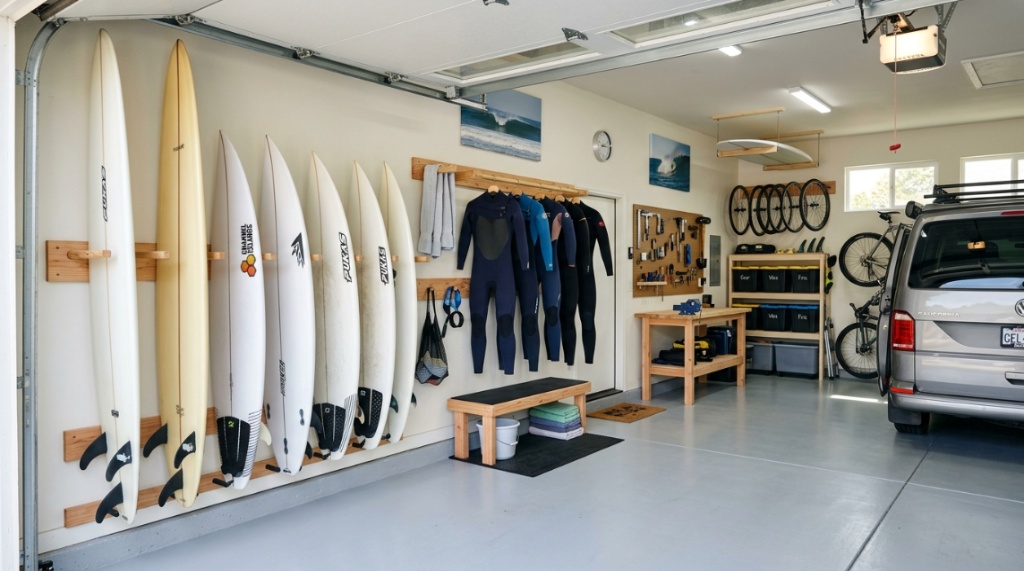
The biggest challenge is balancing the need to protect expensive, moisture-sensitive surf equipment with the limited square footage of a typical garage. Wet wetsuits, bulky boards, and loose leashes quickly turn an organized space into a chaotic, tripping hazard. Without a dedicated system, you risk board dings, moldy gear, and lost space for your car or tools.
Understanding the Problem: Size and Sensitivity
Surfboards are long, awkwardly shaped, and often the single largest item you need to store. Wetsuits, fins, and wax are small but moisture-prone. Combining these with car tires, garden tools, and storage boxes creates a recipe for accidental damage. A standard two-car garage loses significant floor space when boards are leaned against walls or laid flat.
The Cost of Poor Storage
Storing a board on its rail or fin can permanently warp the foam. A wetsuit left crumpled in a damp corner develops mildew that ruins the neoprene. The financial loss from replacing damaged gear can quickly outweigh the cost of a proper storage setup. Protecting your investment should be your primary motivation for reorganizing.
Why Garages Are Actually Ideal (With the Right Plan)
Despite the challenges, garages offer shelter from UV rays and rain. They are also close to your vehicle for hauling gear to the beach. With a few strategic additions, you can transform a cluttered garage into a functional surf hub. The key is going vertical and creating zones for wet versus dry gear.
Why Is Vertical Storage the Best Solution for Surfboards?
Vertical storage is the single most effective method because it takes advantage of unused wall space, keeps boards off the floor, and prevents warping. By mounting racks on walls or the ceiling, you free up the entire floor area for parking, a workbench, or other storage. This approach instantly doubles your usable garage space surf gear capacity.
Wall Racks vs. Ceiling Hoists
Wall racks are best for boards you access frequently. They allow you to grab a board in seconds and return it just as fast. Ceiling hoists are ideal for long-term storage of backup boards or winter quivers, keeping them completely out of the way. Choose wall racks for daily drivers and hoists for the deep quiver.
DIY vs. Commercial Racks
Building your own rack from 2x4s and pipe insulation is budget-friendly and custom-fit for your board lengths. However, commercial racks often come with padded arms and adjustability that better protect expensive epoxy boards. The best choice depends on your skill level and the value of the boards you are storing.
How High Should You Mount the Racks?
Mount the bottom rack at least 48 inches from the floor. This allows you to store items underneath, like a trash can or toolbox, without hitting the boards. The top rack should be high enough to clear your car’s roof when parked. Measure your vehicle’s height before drilling any holes.
How Can You Store Wetsuits Without Them Stinking?
Drying and hanging wetsuits properly is the only way to prevent the infamous “surf funk.” Never leave a wetsuit crumpled in a ball or inside a sealed bag. Use a wide, padded hanger specifically designed for neoprene, and store it in a well-ventilated area of the garage. This keeps the material fresh and extends its lifespan.
Best Hangers and Drying Racks
Standard wire hangers will stretch the shoulders of a wetsuit over time. Use a heavy-duty plastic hanger with rounded edges or a dedicated wetsuit drying tree that allows airflow inside the suit. A wall-mounted fold-down rack is an excellent space-saver that keeps the suit off the floor while it drips dry.
Ventilation Is Non-Negotiable
A closed garage traps humidity, which is the enemy of neoprene. If your garage lacks windows, install a small exhaust fan or a dehumidifier to circulate air. Hanging a wetsuit in an airtight space is just as bad as leaving it in the trunk of your car. Airflow is the cheapest cleaning product you can buy.
Creating a Wet Gear Zone
Designate a specific corner of the garage with a drip tray or a mat for wet gear. Include a hook for the wetsuit, a mesh bag for the rash guard, and a rack for booties. This zone keeps the moisture contained and prevents it from soaking into cardboard boxes or wooden shelves nearby.
Which Garage Layout Works Best for a Surf Quiver?
The best layout is a loop system that follows your pre-surf and post-surf routine. The storage should flow from the door (where you enter with wet gear) to the drying area, then to the quiver rack, and finally to the car loading zone. This eliminates backtracking and keeps the space logical.
The Cleaning Station Layout
Place a small utility sink or a hose hookup near the garage door. This is where you rinse your board and wetsuit before they ever enter the storage area. A “wet entry” zone prevents sand and salt from being tracked into the clean storage sections of the garage.
Zone 1: The Entry Point
Use a waterproof mat and a heavy-duty hook for a duffel bag. This area should have a drain or be easy to hose down. Store a spray bottle of fresh water here to give your gear a quick rinse immediately upon return. This small habit dramatically reduces corrosion of zippers and fin boxes.
Zone 2: The Drying and Tool Area
Adjacent to the entry point, install a wall-mounted drying rack for wetsuits and a shelf for your wax comb, leash string, and fin key. This is also where you store a soft brush for cleaning the traction pad. Keeping tools here prevents you from searching the whole house for them.
Zone 3: The Board Quiver and Car Load
The wall rack for boards should face the car. This allows you to grab a board, walk directly to the vehicle, and load it without turning corners. Leave a clear path on the floor from the rack to the garage door. Avoid storing anything on the floor in this path. Once your surf gear is perfectly organized, don’t overlook the rest of your storage space. For those who enjoy hitting the greens when the waves are flat, check out these High MOI Golf Putters to Improve Putting Accuracy to keep your equipment just as streamlined as your surfboard racks.
What Accessories Help Maximize Small Garage Space?
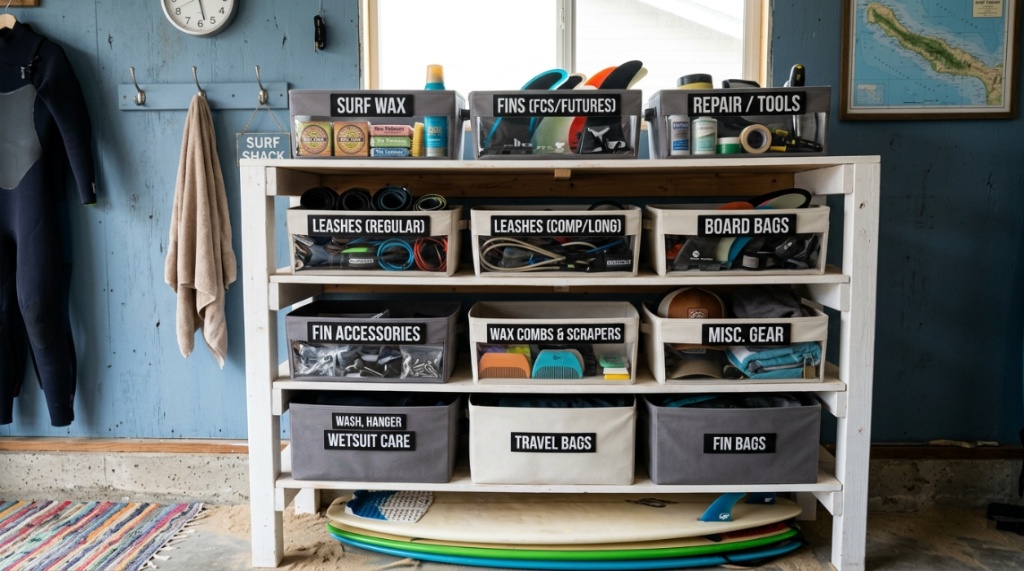
Stackable bins, magnetic strips, and over-the-door organizers are small investments that yield significant space gains. These items handle the “small stuff” like fins, leashes, wax, and ear plugs, which typically get lost in the chaos of a large garage. Efficient accessory storage prevents clutter from creeping into your board storage zone.
Magnetic Strips for Metal Gear
Mount a strong magnetic strip on the wall near your tool area. This is perfect for holding fin keys, pliers, and small screwdrivers used for changing fin setups. It keeps these critical items visible and accessible, eliminating the need for a drawer that gets filled with junk.
Overhead Shelving for Bulk Items
The space above the car hood is wasted square footage. Install heavy-duty overhead shelving for storing surf bags, travel board bags, and extra wetsuits. These items are bulky but not accessed daily, making them the perfect candidates for storage at the 7-foot height ceiling line.
Clear Bins for Leashes and Fins
Use transparent, stackable bins to store leashes, ankle straps, and fin sets. Label each bin clearly. Being able to see the contents without opening the lid saves time when you are rushing to pack for a dawn patrol session. Keep these bins on a shelf above the drying rack, not on the floor.
How Do You Protect Boards from Heat in a Garage?
Heat causes delamination, where the foam separates from the fiberglass shell. Never store a board directly against an exterior wall that gets sun exposure, or in the rafters near the roof. Position racks on interior walls and consider radiant barrier paint on the garage ceiling to reflect heat away from the hanging boards.
Measuring Garage Temperatures
Attach a simple thermometer or a Bluetooth temperature sensor to the wall near your board rack. If the temperature exceeds 100°F (38°C), you need an active cooling strategy. Epoxy boards are particularly sensitive to high heat and can blister in a single afternoon of extreme garage temperatures.
Passive Cooling Solutions
White paint on the roof and garage door reflects sunlight. A simple solar-powered attic fan installed in the garage roof pulls hot air out. These solutions require no electricity and are extremely effective at lowering the peak temperature inside the garage during hot summer months.
Board Bags as a Last Line of Defense
While bags are primarily for travel, a thick padded board bag acts as a thermal blanket. It slows the rate at which the board heats up. For a board stored in a very hot garage, a reflective silver sun cover is a better investment than a fancy bag. Never use a black bag in a hot garage.
What Are the Pros and Cons of Ceiling Mounting Surfboards?
Ceiling mounting is the ultimate space saver, but it has trade-offs. The primary pro is that it completely clears the floor and walls for other uses. The primary con is accessibility, as it requires a step stool or pulley system to retrieve the board, which is inconvenient for daily use.
Comparison: Ceiling Racks vs. Wall Racks
| Feature | Ceiling Rack | Wall Rack |
|---|---|---|
| Space Saved | Maximum (floor & wall) | Moderate (floor only) |
| Access Speed | Slow (pulley or ladder) | Fast (grab and go) |
| Best For | Long-term storage | Daily drivers |
| Installation Difficulty | Moderate (studs in ceiling) | Easy (wall studs) |
| Risk of Heat Exposure | High (near roof) | Low (lower wall) |
When to Use Ceiling Storage
Use ceiling storage for boards you use only on vacation, for beginner boards you are saving for a friend, or for broken boards waiting for repair. Avoid storing your favorite shortboard or daily longboard up there. The effort required to get it down will frustrate you and may lead to accidents.
Best Ceiling Pulley Systems
Look for a pulley system with locking cleats that hold the rope securely. Avoid systems with plastic clips that wear out under UV light. A marine-grade rope and stainless steel pulleys will last for years without rusting or fraying. Test the system with a heavy weight before trusting it with your board.
How Can You Create a Surf Gear Inventory System?
An inventory system prevents duplicate purchases and helps you track maintenance. Simply list every board, wetsuit, leash, and fin set you own. Keep a whiteboard or a digital note on your phone with the list. This takes five minutes but saves you from buying a second leash when you already have one buried in a bin.
Labeling Your Boards
Use a small sticker or a piece of blue painter’s tape on the stringer to write the board’s dimensions and date of last wax removal. This is incredibly helpful when you have multiple boards that look similar. Knowing which board is which prevents confusion and helps you rotate usage evenly.
Maintenance Schedule
Create a simple log for each board. Track when you last replaced the leash, when the wax was scraped off, and when you checked for pressure dings. This small habit dramatically extends the life of your equipment. A monthly 10-minute check is all it takes to catch small problems before they become expensive repairs.
Digital vs. Physical Inventory
A physical whiteboard on the garage wall is great for a single surfer. For a family of surfers, a shared Google Sheet works better. Include a column for “condition” and “storage location.” This is especially useful when someone else in the household needs to grab a specific board and knows exactly where to find it.
Is It Safe to Store Surfboards in a Garage During Winter?
Yes, it is safe as long as the garage stays above freezing and the boards are kept dry. The primary winter risk is not cold, but condensation. When a warm board is brought into a freezing garage, moisture condenses on the surface and can seep into small cracks. Dry the board completely before bringing it inside the garage.
Insulating the Garage Door
A non-insulated garage door can be 10-20 degrees colder than the inside of the garage. This creates a cold zone near the door. Install a foam insulation kit on the garage door panels. This stabilizes the temperature and reduces the condensation risk significantly. It also makes the garage more comfortable for winter towel changes.
Storing Wet Gear in Cold Weather
Never leave a wet wetsuit or board bag in a cold garage overnight. The water inside the fabric can freeze and damage the neoprene cells, making the suit brittle. Hang the wetsuit in your laundry room for a few hours to dry completely, then move it to the garage for long-term storage.
Heating Options for the Garage
A small space heater with a thermostat can keep the garage above 50°F (10°C) and prevent freezing issues. However, never point a heater directly at a surfboard. The radiant heat can cause localized hot spots that delaminate the glass. Position the heater to warm the air, not the equipment.
How Do You Organize a Family Quiver of Surfboards?
Organize boards by frequency of use and height. Place the most-used boards at eye level on wall racks. Store the boards of shorter family members on lower racks. This prevents kids from climbing on dangerous stools to reach their boards and keeps the workflow logical for everyone in the household.
Color Coding and Zones
Assign a specific color of tape or a zone label to each family member. For example, Dad’s boards go on the left rack, Mom’s in the middle, and the kids’ boards on the lower right rack. This teaches children responsibility for their own gear and makes it easy to see if something is missing after a trip.
Shared Accessory Bins
Instead of each person having their own wax, fin key, and leash box, create a central “family station.” This reduces clutter and ensures that resources are shared. Use a large shelf with labeled bins for each type of accessory. Teach everyone to return items to the bin after use.
Rotation Schedule for Beginners
If you have a growing child, store smaller boards that they have outgrown in a separate “hold” area. Label them with the intended future user or a sale date. This prevents you from accidentally grabbing a board that is too small for someone, and it keeps the active quiver lean and manageable.
How Do You Maintain Cleanliness in a Surf Gear Garage?
A clean garage prevents sand from scratching glass boards and salt from corroding metal components. Install a floor mat at the entrance to catch sand. Sweep or vacuum the garage floor weekly. A simple 5-minute cleanup routine after every surf session keeps the space usable and prevents the buildup of beach grit.
Weekly Cleaning Routine
Every Sunday, wipe down the wall racks with a damp cloth to remove salt dust. Vacuum the floor around the drying rack. Check the bins for any forgotten wet leashes or towels and hang them to dry. This routine prevents the musty smell that can settle into a garage over time.
Deep Cleaning Tips
Once a month, take all the boards down and wipe the racks with a mild vinegar solution. This prevents mildew from forming on the padding. Also, wash the garage floor with a degreaser to remove tire marks and salt residue. A clean garage is a safer garage for storing expensive surf equipment.
Pest Prevention
Garages attract spiders and other insects that can make webs on your boards. Seal cracks in the walls and keep the floor clear of boxes. A weekly sweep of the corners removes webs before they become a problem. Insect repellent granules around the perimeter of the garage help keep unwanted guests away from your neoprene.
Conclusion
Maximizing garage space for surf gear is about working smarter, not harder. By prioritizing vertical storage with wall racks, creating dedicated drying zones for wetsuits, and establishing a logical layout, you can transform a cluttered garage into a functional surf sanctuary. The key is to protect your equipment from heat, moisture, and physical damage while keeping everything accessible for spur-of-the-moment sessions. A little planning now saves you hours of frustration and hundreds of dollars in gear replacement later.
Start by assessing your current wall space and investing in a quality rack system. Clean out the old boxes of beach junk you have not touched in years. Once you see how much room you actually have, you will wonder why you did not do this sooner. Your boards, wetsuits, and car will all thank you for the extra breathing room.
Frequently Asked Questions
Can I store multiple surfboards on the same wall rack?
Yes, most wall racks are designed to hold 2 to 5 boards depending on the width. Ensure the rack is mounted into studs and can support the combined weight of all the boards. Heavier longboards require a sturdier rack with more support points.
How high should I hang my surfboards in the garage?
Hang the bottom rack at least 48 inches from the floor. This allows for storage underneath. The top rack should clear your car’s roof height. Measure your vehicle’s highest point before mounting the upper rack to avoid accidentally denting your car.
Should I wax my board before storing it in the garage?
No, remove old wax before long-term storage. Old wax can become sticky due to temperature changes and attract dust and dirt. A clean deck is easier to inspect for dings. Re-wax the board just before your next surf session.
Can I hang a surfboard on a drywall without studs?
No, you must anchor into wall studs. Drywall alone will not support the weight of a surfboard, especially when bumped. Use a stud finder to locate the wood or metal studs. If studs are not available where you need them, install a plywood backer board across multiple studs first.
How do I stop my surfboard from sliding off a horizontal rack?
Install padded arms with vertical lips or rubber stoppers at the end. Most commercial racks include this feature. For DIY racks, wrap the arms in pipe insulation and add a pool noodle cut to size at the end to create a stopper that prevents boards from sliding forward.
Is it okay to store a surfboard on its side?
Yes, storing a board on its side on padded racks is ideal. It prevents pressure on the rails and fins. Never store a board lying flat on its deck or bottom on a hard surface, as this can cause permanent warping of the foam core.
How often should I check my garage surf storage system?
Check your rack mounts and padding every three months. Tighten any loose screws and replace worn foam padding. A quick quarterly inspection prevents a catastrophic failure that could damage a valuable board.