


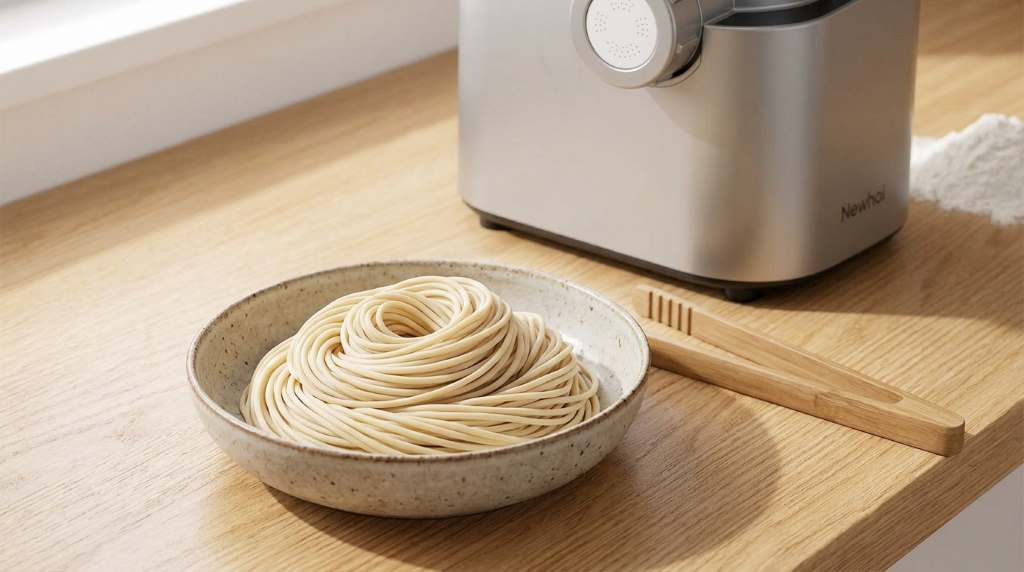
Yes, the Newhai 550W automatic noodle maker can make fresh pasta far easier than manual rolling and cutting. This motorized pasta machine combines dough pressing and noodle cutting in one compact system. Americans consume about 5.95 billion pounds of pasta yearly, while the average person eats roughly 20 pounds annually. That demand makes convenient fresh pasta equipment increasingly practical for busy kitchens.
Key Takeaways Before Buying
- Power: The 550W motor provides strong mechanical assistance for pressing and cutting dough.
- Two functions: The machine presses dough and cuts noodles without requiring blade removal.
- Thickness control: Adjustable rollers support dough thickness from approximately 0.3 to 5 millimeters.
- Cutting options: The included blades produce approximately 2mm slim noodles and 6mm wide noodles.
- Construction: Food-grade stainless steel provides a durable, practical exterior for frequent kitchen use.
- Best use: It suits home cooks, meal preppers, hobby chefs, and smaller food operations.
- Main caution: Shorter operating cycles help manage motor heat during repeated pasta production.
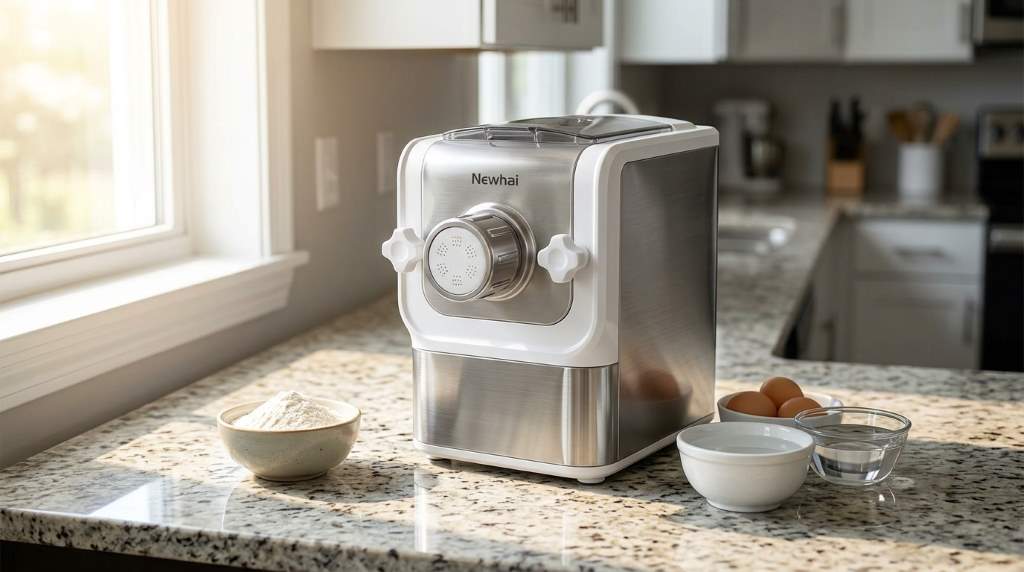
Why the Newhai 550W Automatic Noodle Maker Stands Out
The Newhai 550W automatic noodle maker focuses on reducing repetitive preparation work. Instead of manually flattening dough, you feed prepared dough through powered rollers. The machine then helps create consistent sheets before cutting them into noodles.
That approach matters because pasta preparation often involves several repetitive stages. You must knead, rest, roll, flatten, adjust thickness, and finally cut the dough. With this machine, the powered rolling and cutting stages require considerably less physical effort.
The Newhai also uses a 2-in-1 design that combines pressing and cutting functions. Consequently, you can move from dough preparation to noodle production without repeatedly rebuilding the machine. This workflow makes the appliance especially useful when preparing several portions at once.
The machine uses a 550W motor, which gives it substantially more mechanical assistance than traditional hand-crank equipment. However, motor power should support sensible batch sizes rather than encourage uninterrupted operation. A stronger motor still needs appropriate cooling time during demanding sessions.
Its stainless-steel construction also gives the machine a sturdy character. For kitchens that regularly prepare fresh noodles, that solid construction can feel more practical than lightweight plastic equipment. The heavier body also helps reduce unwanted movement while rollers handle dough.
What the Two-in-One Design Actually Changes
A conventional manual pasta maker separates effort from output. You provide the force, control the roller, and manually manage every sheet. The Newhai shifts much of that repetitive mechanical work to its motor.
More importantly, the machine lets you press dough and cut noodles within the same workflow. That means fewer interruptions between preparation stages. Therefore, the main advantage involves workflow efficiency rather than simply motor speed.
If you regularly make pasta for several people, that distinction becomes more valuable. A single serving may not justify an electric machine for every cook. However, repeated batches can quickly make powered preparation more appealing.
How the Newhai Makes Fresh Pasta Easier
Fresh pasta starts with a workable dough, not with the machine itself. Your dough should feel cohesive enough to hold together without becoming excessively sticky. For practical kitchen organization, these budget kitchen updates can also help create a cleaner preparation area.
Once your dough reaches the right consistency, divide it into manageable portions. Smaller portions make feeding easier and reduce unnecessary pressure on the rollers. Then flatten each portion slightly before introducing it into the machine.
Start with a thicker roller setting during the first passes. Gradually reduce the thickness as the dough becomes smoother and more uniform. This approach helps prevent sudden pressure changes and gives you greater control over the final texture.
After achieving the desired sheet thickness, guide the dough toward the cutting section. Choose the appropriate blade for your preferred noodle width. The supplied 2mm and 6mm options provide two straightforward starting points.
Thin noodles work well with lighter sauces, soups, and delicate preparations. Wider noodles can provide greater surface area for richer sauces and hearty dishes. Therefore, choosing the blade should depend on your recipe rather than convenience alone.
A Better Workflow for Consistent Results
Consistency begins before the dough reaches the rollers. Measure ingredients carefully and keep hydration reasonably consistent between batches. Otherwise, even a powerful machine cannot compensate for dramatically different dough textures.
Next, dust the dough lightly when necessary. Excess flour can create unnecessary mess and may affect the finished texture. Meanwhile, too little flour can encourage sticking around rollers or cutting components.
Feed dough steadily instead of forcing large pieces through quickly. Let the rollers pull the dough naturally while you guide it carefully. This simple habit can improve sheet consistency and reduce unnecessary mechanical strain.
Finally, separate freshly cut strands before they stick together. A lightly floured tray or drying rack can help keep noodles organized. This step becomes especially important when you prepare multiple batches consecutively.
Newhai 550W Specifications Worth Understanding
The machine’s specifications reveal where it fits within the pasta-maker market. The roller width measures approximately 200 millimeters, giving you a useful working area for household batches. The body measures roughly 14.4 by 13.6 by 12 inches and weighs about 44 pounds.
That weight creates an important tradeoff. A heavier machine generally feels more planted during operation, but moving it requires more effort. Therefore, choose a permanent counter location if you expect frequent use.
The adjustable dough thickness range reaches approximately 0.3 to 5 millimeters. That range gives you considerable flexibility for different pasta textures and preparations. However, achieving the perfect thickness still requires gradual adjustment and dough consistency.
The dual cutting system provides 2mm and 6mm noodle widths. Those options cover basic thin and wide noodle applications without overwhelming beginners. Cooks seeking specialized shapes may eventually want additional cutting accessories.
The stainless-steel construction also supports a more commercial-looking design. It can withstand routine kitchen handling better than delicate countertop appliances. Nevertheless, durability does not remove the need for careful cleaning and storage.
Why the 550W Motor Matters
Motor wattage provides useful context, but wattage alone does not determine pasta quality. Roller design, gearing, dough hydration, feeding technique, and cooling all affect performance. Therefore, you should evaluate the complete machine rather than focusing only on 550W.
The motor provides enough power for the machine’s pressing and cutting tasks. Dense dough can still increase mechanical resistance and heat generation. For that reason, sensible portions and controlled operating cycles remain important.
Continuous heavy use can also expose limitations that occasional cooking never reveals. The machine should therefore serve as a powered kitchen assistant rather than an unlimited production line. That distinction helps set realistic expectations before purchase.
Using the Machine Without Overworking It
One of the smartest ways to use an automatic noodle maker involves treating motor temperature as part of your workflow. Do not assume a powerful motor can operate indefinitely under heavy loads. Instead, divide large production sessions into manageable cycles.
Prepare several dough portions before switching the machine on. This strategy reduces idle preparation time between batches. It also lets you focus on feeding and cutting rather than repeatedly stopping to mix ingredients.
Keep the motor housing away from water and direct splashes. The motor itself requires careful handling during cleaning. Wipe accessible surfaces instead of exposing electrical components to moisture.
Also, avoid pushing excessively stiff dough through the rollers. If the dough resists strongly, stop and reassess its consistency. Adding a small adjustment to hydration may solve the problem more effectively than applying greater force.
Cleaning After Each Pasta Session
Cleaning should happen soon after production ends. Dried dough becomes harder to remove and can collect around rollers and cutters. Quick maintenance therefore saves time during your next pasta session.
Start by removing loose flour and dough fragments from accessible surfaces. Use a dry or appropriately damp cloth according to the manufacturer’s care guidance. Never pour water directly onto the machine.
Pay particular attention to cutting areas where small dough pieces can accumulate. A soft brush can help remove dry residue without damaging surfaces. Avoid aggressive tools that could scratch stainless steel or affect moving components.
Once cleaning finishes, allow exposed surfaces to dry completely. Store the machine somewhere clean and dry between uses. Good storage habits help preserve both appearance and mechanical reliability.
Who Should Buy the Newhai 550W?
The Newhai makes the most sense for people who already enjoy fresh pasta. It offers the greatest value when you expect regular use rather than occasional experimentation. Frequent pasta preparation makes its powered workflow easier to appreciate.
Home cooks who prepare family meals can benefit from faster dough processing. Meal preppers can also produce several portions during one organized session. Meanwhile, hobby chefs can experiment with thickness and noodle styles without relying entirely on manual labor.
Small food businesses may also consider the machine for limited production requirements. However, commercial kitchens should evaluate expected volume, duty cycles, ventilation, cleaning procedures, and local equipment requirements. A household-oriented workflow may not satisfy high-volume production demands.
People with very limited counter space should think carefully before buying. The machine has a substantial footprint and weighs around 44 pounds. If you need to store it after every use, that weight can reduce its practical convenience.
Likewise, casual cooks may prefer a lighter manual machine. An electric model becomes more compelling when repetition becomes the main inconvenience. In other words, your cooking frequency matters as much as the machine’s specifications.
When a Manual Pasta Maker May Make More Sense
A manual machine remains attractive for cooks who value simplicity and occasional preparation. It usually requires less counter space and does not depend on an electrical motor. It also gives the user direct physical control over every stage.
However, manual equipment becomes tiring during repeated batches. Turning a crank hundreds of times can transform an enjoyable cooking project into repetitive work. Electric assistance addresses precisely that limitation.
If you make pasta once every few months, the Newhai may represent more equipment than you need. Conversely, weekly pasta sessions can justify its larger footprint. Your actual cooking habits should determine the final decision.
Can Accessories Expand Its Pasta-Making Potential?
The included cutters cover two practical widths, but some cooks eventually want greater variety. Different cutter sizes can support additional noodle styles and recipe formats. Before purchasing accessories, confirm compatibility with your exact Newhai configuration.
Accessory systems can also change how you approach homemade pasta. Instead of repeating one noodle style, you can match noodle width with sauces and dishes. For example, broader noodles can suit rich sauces, while thinner noodles can complement lighter preparations.
However, accessory convenience should not become an excuse for unnecessary purchases. Start with the supplied blades and learn the machine’s behavior first. Then add accessories only when a specific recipe genuinely requires them.
For cooks comparing powered options with attachment-based systems, this pasta maker attachments review provides useful context. Different systems prioritize different combinations of flexibility, storage, and convenience.
Choosing Noodles Based on the Dish
Think about sauce before choosing noodle thickness. Wide noodles provide more surface area for substantial sauces and textured ingredients. Thin noodles can create a lighter bite with simple sauces and broths.
Texture also changes how fresh pasta behaves during cooking. Fresh noodles generally cook faster than dried pasta. Therefore, watch the pot closely rather than automatically following dried-pasta cooking times.
Fresh pasta also rewards immediate cooking or proper storage. If you cannot cook it soon, organize portions carefully before refrigeration or freezing. Proper handling prevents strands from sticking into one large mass.
How to Build a Better Pasta-Making Station
A good machine works best inside an organized preparation system. Give the Newhai enough clearance for feeding dough and collecting finished noodles. Also keep flour, trays, utensils, and cleaning supplies within easy reach.
Counter height matters more than many beginners expect. A stable surface makes feeding dough easier and reduces awkward bending. Therefore, avoid placing the machine on unstable carts or crowded surfaces.
Commercial-style equipment also benefits from deliberate workflow planning. Separate ingredient preparation from machine operation whenever possible. These commercial kitchen elements offer useful principles for organizing food preparation efficiently.
Keep finished noodles away from incoming dough. This simple separation reduces confusion and keeps your workspace cleaner. It also makes batch counting and portion control easier.
A Simple Fresh Pasta Workflow
- Step 1: Prepare and rest your dough according to your chosen recipe.
- Step 2: Divide the dough into smaller, manageable portions.
- Step 3: Flatten each portion before feeding it through the rollers.
- Step 4: Start with a thicker setting and gradually reduce thickness.
- Step 5: Choose the 2mm or 6mm cutter for your recipe.
- Step 6: Guide noodles onto a lightly floured tray or suitable drying surface.
- Step 7: Separate strands before preparing the next batch.
- Step 8: Clean accessible machine surfaces after production ends.
This workflow keeps the machine’s role simple and predictable. More importantly, it separates preparation decisions from mechanical operation. That separation helps beginners achieve better results with fewer unnecessary adjustments.
Pros and Cons at a Glance
The Newhai 550W offers several meaningful advantages for frequent fresh-pasta cooks. However, the same features that improve capability can create practical limitations. Understanding both sides gives you a more realistic buying decision.
- Pros: Powerful 550W motor, 2-in-1 operation, stainless-steel construction, adjustable thickness, dual noodle widths, and substantial build.
- Pros: Powered rollers reduce repetitive manual work during larger pasta sessions.
- Pros: The machine supports both home cooking and selected small-scale food applications.
- Cons: The approximately 44-pound body makes frequent relocation inconvenient.
- Cons: Two included cutter widths limit noodle-shape variety without additional accessories.
- Cons: Heavy operation can generate motor heat, requiring sensible operating cycles.
- Cons: Cleaning requires care around electrical components and moving parts.
Is the Newhai 550W Worth Buying?
For frequent fresh-pasta cooks, the Newhai 550W can be a worthwhile productivity upgrade. Its greatest strength comes from reducing repetitive rolling and cutting work. The combination of power, thickness control, and dual cutting makes the workflow straightforward.
However, buyers should understand its physical size and operating limitations. This is not a lightweight appliance designed for effortless cupboard storage. Instead, it suits users who can dedicate a stable countertop area to regular pasta production.
The machine also rewards realistic batch planning. Prepare manageable quantities, monitor operating conditions, and allow sensible breaks during demanding sessions. Those habits can help you extract more value from the motor without treating it like unlimited commercial equipment.
Ultimately, the best reason to buy this machine is frequency. If fresh pasta appears regularly on your menu, powered preparation can save meaningful effort. If pasta remains an occasional experiment, a simpler manual machine may provide better overall value.
Final Verdict: Fresh Pasta With Less Manual Work
The Newhai 550W automatic noodle maker turns one of the most repetitive parts of homemade pasta into a powered process. Its 550W motor, adjustable thickness control, stainless-steel body, and dual cutting system create a practical combination. Most importantly, it lets you focus more on recipes and less on repetitive mechanical work.
Still, good results depend on more than machine specifications. Use consistent dough, sensible portions, gradual thickness adjustments, and proper cleaning habits. With that approach, the Newhai can become a dependable tool for regular fresh noodle preparation.
Ready to make fresh pasta with less effort? Consider the Newhai 550W if you regularly prepare noodles and have enough counter space for its substantial build. Start with the included cutters, master the basic workflow, and expand your setup only when your cooking habits demand it.
Frequently Asked Questions
Is the Newhai 550W automatic noodle maker good for beginners?
Yes, its powered pressing and cutting functions make the basic pasta workflow relatively straightforward for beginners.
What noodle sizes does the Newhai 550W make?
The included dual blade produces approximately 2mm slim noodles and 6mm wide noodles.
Can the Newhai 550W handle thick pasta dough?
Yes, but very dense dough can increase motor strain, so manageable portions and sensible operating cycles remain important.
Is the Newhai 550W easy to clean?
Yes, accessible surfaces clean relatively easily, but you must protect the motor and electrical components from water.
Is the Newhai 550W suitable for commercial kitchens?
It can suit limited small-scale production, but high-volume operations should evaluate duty cycles and commercial equipment requirements carefully.

+ There are no comments
Add yours