

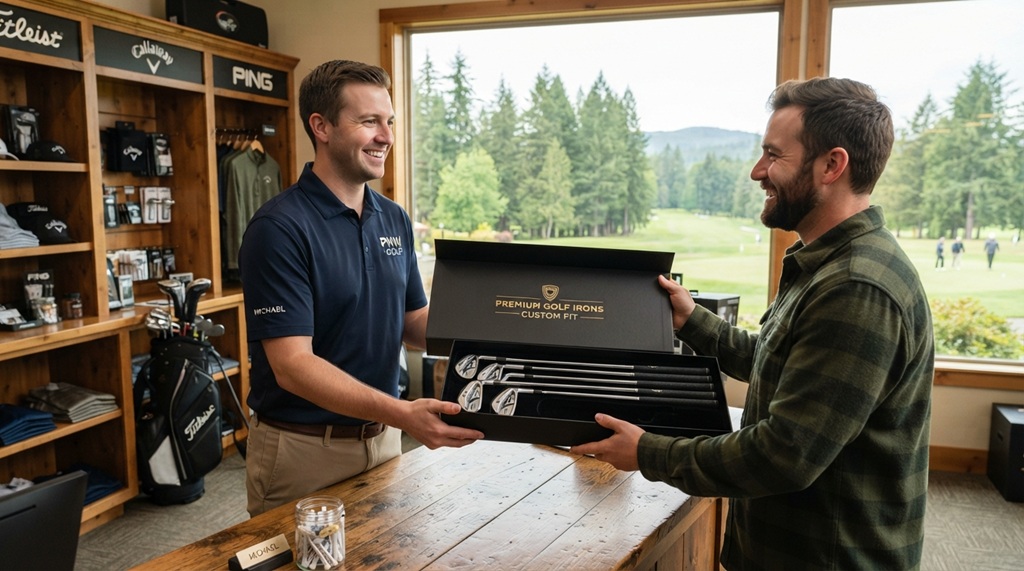
Finding the perfect gift for a golfer in Washington State can feel like navigating a tricky dogleg. You want something they’ll genuinely use, but golf equipment is deeply personal. The clubs they swing need to match their body type, skill level, and playing style. Getting this wrong means the gift might sit in the garage, or worse, get returned. The good news is that with a little research and a smart strategy, you can confidently choose a set of irons they’ll love. This guide walks you through the entire process, from understanding what your golfer needs to navigating the unique buying landscape in Washington, so you can make a choice that improves their game and shows you really paid attention.
Why Gifting Golf Irons Is Tricky (And How to Get It Right)
Golf irons are not a one-size-fits-all purchase. Unlike a new putter or a box of balls, irons are the workhorses of the bag, used for precision shots from various distances. The wrong set can lead to frustration, poor performance, and even injury. The primary challenge is matching the equipment to the player’s swing. Factors like swing speed, tempo, and consistency dictate the ideal shaft flex, clubhead design, and loft configuration.
To get it right, you need to shift your focus from “surprising them with a box” to “gifting them an experience.” The best approach is to involve them in the process, even if it sacrifices the element of surprise. This ensures the gift is perfect and demonstrates that you value their enjoyment over the theatrical reveal. If you’re looking for a curated starting point, you can gift golf irons in Washington State by first understanding the specific needs of the player, which we’ll break down in the next sections.
Step 1: Decode Their Game Before You Shop
Before you even look at brands, you need to become a detective. Gather intel on their current equipment and playing habits. This information is the blueprint for your purchase.
Assess Their Skill Level
This is the most critical factor. A beginner needs a “game improvement” iron with a large sweet spot and more loft to get the ball airborne easily. An intermediate player might benefit from “super game improvement” or “players distance” irons that offer a balance of forgiveness and workability. A low-handicap player will likely want a “players” or “blade” iron that offers maximum control and feel, but requires a consistent swing to use effectively. Gifting a blade set to a high-handicapper is a recipe for frustration.
Check Their Current Shafts
Look at the shafts in their current set. Are they steel or graphite? What flex are they (L, A, R, S, X)? This gives you a massive clue. Graphite shafts are typically lighter and help players with slower swing speeds generate more clubhead speed. Steel shafts are heavier and offer more control for faster, more aggressive swings. The flex (Regular, Stiff, etc.) must match their swing speed. If you’re unsure, a local pro shop fitter can tell you what these markings mean.
Consider Their Physical Attributes
Height and wrist-to-floor measurement are crucial for determining the correct club length and lie angle. Most off-the-rack sets are designed for an “average” height (around 5’9″ to 6’0″). If your golfer is significantly taller or shorter, they will need custom-fit clubs to ensure the sole of the club sits flat on the ground at address. A lie angle that is too upright or too flat will cause the ball to fly consistently left or right.
Step 2: The Fitting Experience Is the Real Gift
This is the single most important piece of advice in this guide. Do not buy irons off the rack without a fitting. A professional club fitting is the process of using a launch monitor to measure ball speed, launch angle, spin rate, and dispersion with various club and shaft combinations. The fitter uses this data to find the perfect setup for the player’s unique swing.
Instead of buying the clubs yourself, consider gifting a gift certificate for a professional fitting at a reputable facility. This accomplishes several things:
- Guarantees a Perfect Fit: The clubs will be built to their exact specifications.
- Removes the Guesswork: You don’t have to worry about getting the shaft flex or lie angle wrong.
- It’s an Experience: It’s a fun, educational hour for the golfer, making it a memorable gift in itself.
After the fitting, they can order the clubs directly. Many fitters will even apply the cost of the fitting toward the purchase of the clubs, making it a financially smart option.
Step 3: Where to Buy Golf Irons in Washington State
Washington State has a diverse golf retail landscape, from massive big-box stores to specialized local fitters. Each offers different advantages.
Sourcing Through Local Pro Shops and Fitting Studios
For an elite gifting experience, local pro shops and specialized fitting studios in the Seattle metro area, Bellevue, and near premier courses like Chambers Bay offer unmatched personalized service through certified PGA professionals who provide expert fitting access and direct manufacturer custom orders, while also making it easy to pair your gear upgrade with tips on select durable travel golf bags on a budget.
Big-Box Retailers
Stores like Golf Galaxy and PGA Tour Superstore (if available in your area) offer a vast inventory and have launch monitors for basic fittings. They are a good option if you want to see and feel many different clubs in person. However, the fitting experience can be less personalized than a dedicated studio, depending on the staff and time of day. They are excellent for comparing prices and taking advantage of sales.
Online Retailers
Buying online can be convenient and sometimes cheaper, but it’s a risky move for a gift. You can’t test the clubs, and you’ll be responsible for returns if the specs are wrong. If you do go this route, only purchase from authorized retailers with a clear return policy. Many online retailers now offer “virtual fittings” using video analysis, but this is still not as accurate as an in-person session with a launch monitor.
Step 4: Understanding the Cost and Value
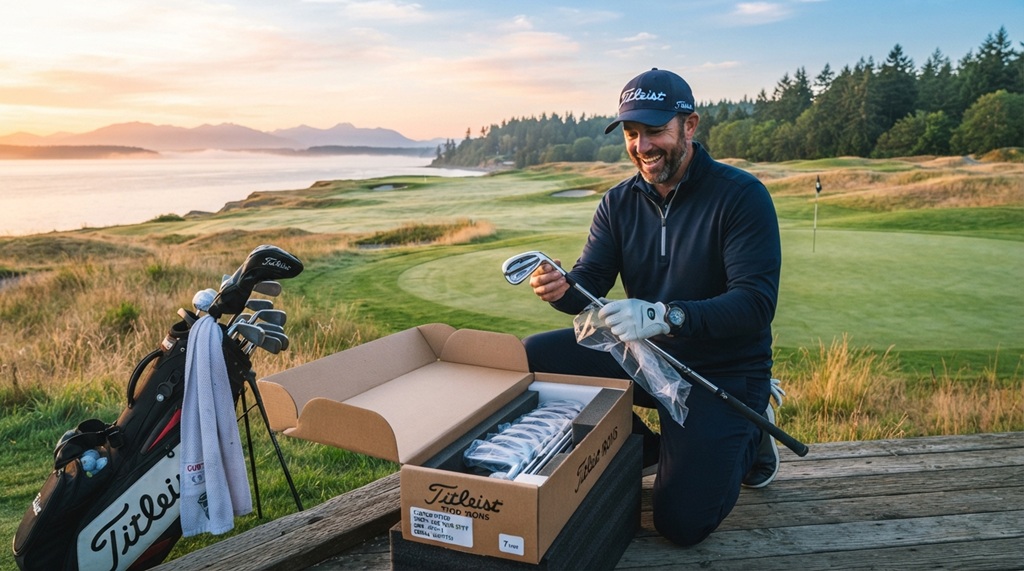
Golf irons are a significant investment. A new set of irons (typically 4-PW, or 5-PW, AW) can range from $600 for a budget-friendly game improvement set to over $1,500 for a premium forged set from brands like Titleist, Callaway, TaylorMade, or PING.
What Are You Paying For?
The price difference comes down to materials and manufacturing processes. Cast irons are more affordable and often more durable. Forged irons are made from a softer metal, providing a better feel, but they are more expensive to produce. The shaft is also a major cost component. High-end aftermarket shafts can cost several hundred dollars alone. When budgeting, remember to factor in the cost of the fitting, which typically ranges from $50 to $150.
New vs. Used
Don’t overlook the used market. Golf clubs hold their value, but you can find excellent, barely-used sets from a year or two ago at a significant discount. Websites like Callaway Pre-Owned, 2nd Swing, and eBay offer certified pre-owned clubs. This is a great way to get a premium set for a game improvement price. Just be sure to check the condition ratings and return policies carefully.
Key Features to Compare Before You Commit
When you’re looking at different sets, you’ll see a lot of technical jargon. Here’s a simple breakdown of the key features to compare:
| Feature | What It Does | Best For |
|---|---|---|
| Clubhead Design | Refers to the shape and construction. Cavity back (larger, more forgiving) vs. Muscle back/Blade (smaller, more control). | Cavity back for mid-to-high handicaps; Blades for low handicaps. |
| Shaft Flex | The amount the shaft bends during the swing. Options include Ladies, Senior, Regular, Stiff, and X-Stiff. | Must match swing speed. Slower swing = more flex; faster swing = less flex. |
| Loft | The angle of the clubface. Stronger lofts (lower numbers) hit the ball farther but with less height and spin. | Game improvement sets have stronger lofts to help players hit the ball farther. |
| Shaft Material | Steel (heavier, more control) vs. Graphite (lighter, more speed). | Graphite is great for seniors and players with moderate swing speeds; steel is preferred by stronger players. |
Common Mistakes to Avoid When Gifting Irons
Even with the best intentions, it’s easy to make a misstep. Here are the most common pitfalls and how to avoid them.
- Buying a “Surprise” Set: The risk of getting the specs wrong is too high. The surprise is not worth the potential disappointment.
- Ignoring the Shaft: The shaft is the “engine” of the club. Getting the wrong flex or weight can ruin the performance of even the best clubhead.
- Focusing Only on Brand: The best brand is the one that fits them best, not the one with the most advertising. Let the fitting data guide the decision.
- Forgetting About the Wedges: Many sets now come with a Gap or Approach Wedge (AW) instead of a traditional 3-iron. Make sure you know what clubs are included in the set you are looking at.
- Not Setting a Budget: Prices can spiral quickly. Have a clear budget in mind before you start shopping and stick to it.
Frequently Asked Questions
Can I return golf clubs if they don’t fit?
Most retailers have a return policy, but it’s not always straightforward. Big-box stores often have a 30-90 day return policy, but they may charge a restocking fee. Custom-ordered clubs are almost always non-returnable unless they are defective. This is why a fitting is so crucial it minimizes the risk of needing a return.
Is it better to buy a complete set or individual irons?
For most golfers, a complete set (e.g., 5-PW, AW) is the best value. It ensures consistent performance and gapping across the set. Individual irons are typically only purchased to replace a damaged club or to add a specific specialty wedge to fill a gap in the bag.
How often should a golfer replace their irons?
There is no set timeframe, but a general rule of thumb is every 5-7 years for regular players. Over time, the grooves on the clubface wear down, reducing spin and control. If the golfer plays frequently, they may need new irons sooner.
What is the difference between a game improvement and a players iron?
Game improvement irons are designed to be forgiving. They have a larger clubhead, a lower center of gravity, and a wider sole to help get the ball in the air and minimize the effect of off-center hits. Players irons are designed for precision and workability. They have a smaller, more compact head and offer more feedback to the skilled golfer.
Should I buy one brand of irons or can I mix and match?
It is perfectly fine to mix and match brands. Many golfers prefer a specific brand for their long irons and another for their scoring irons or wedges. The most important thing is that the lofts and distances gap correctly between each club, which a good fitter will ensure.
Conclusion
Gifting golf irons is a generous and thoughtful gesture, but it requires a strategic approach to be successful. The key takeaway is to prioritize the fit over the surprise. By understanding the golfer’s skill level, getting a professional club fitting, and choosing the right retailer, you can ensure your gift is one that will be used and appreciated for years to come. Whether you opt for a new set from a local fitter or a certified pre-owned set online, the effort you put into the process will be evident in the result. The ultimate goal is to help them play better and enjoy the game more, and a properly fitted set of irons is the perfect way to do just that.

+ There are no comments
Add yours